



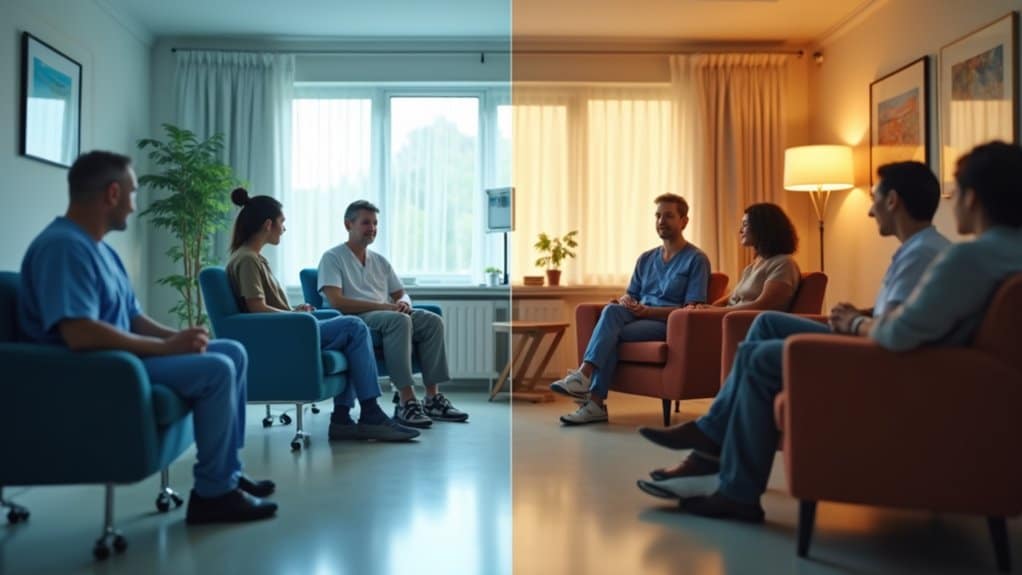


A residential treatment program provides you with intensive, live-in care for moderate to severe addiction, offering 24-hour supervision in a substance-free environment. You’ll receive medical detox, individual and group therapy, medication management, and skill-building through evidence-based approaches like CBT and DBT. Programs typically last 30 days to 12 months, with research showing ideal outcomes for stays of at least 80 days. This structured setting removes daily triggers while addressing the physical, psychological, and social aspects of your recovery, and understanding how these components work together can help you determine if this level of care matches your needs.
Understanding Residential Treatment Programs: Definition and Core Purpose
When addiction reaches a severity that outpatient care can’t adequately address, residential treatment programs offer an intensive, live-in alternative designed to break the cycle of substance use. You’ll receive twenty-four-hour supervision in a structured, substance-free environment that removes you from daily triggers and harmful influences. These programs target moderate to severe addiction through expansive care, including medical detox, individual and group therapy, medication management, and psychoeducation. The core purpose centers on promoting sustained abstinence while addressing physical, psychological, and social dimensions of addiction. Through individualized treatment planning, you’ll work with professionals who tailor interventions to your specific needs and circumstances. Research demonstrates that residential treatment is associated with improved recovery outcomes compared to non-residential alternatives. The program emphasizes relapse prevention strategies and skill-building, preparing you for long-term recovery beyond residential care through structured aftercare planning and continuous support. Program duration varies depending on individual needs and may extend for months or longer to ensure adequate stabilization and skill development.
Key Components of Residential Addiction Treatment
When you enter a residential treatment program, you’ll encounter three foundational components designed to address addiction exhaustively. Medical detox and stabilization guarantee your physical safety during withdrawal, while evidence-based therapy and counseling target the psychological roots of substance use. A structured daily routine then reinforces these interventions by establishing healthy patterns and minimizing opportunities for relapse-triggering behaviors. Many programs incorporate cognitive behavioral curriculum to address criminal thinking patterns and maladaptive behaviors that often accompany substance abuse. Alternative therapies such as yoga, art, music, and pet therapy complement traditional treatment approaches by providing holistic healing opportunities.
Medical Detox and Stabilization
| Detox Phase | Duration |
|---|---|
| Initial Assessment | 1-2 days |
| Active Withdrawal | 3-5 days |
| Stabilization | 2-3 days |
| Shift Planning | Throughout |
This stabilization period typically lasts 5-7 days before moving you to therapeutic programming.
Therapy and Counseling Services
After your body stabilizes from acute withdrawal, the clinical focus shifts to addressing the psychological, behavioral, and social factors that drive substance use. Individual counseling sessions provide personalized exploration of your substance use history, triggers, and relapse prevention strategies through evidence-based modalities like Cognitive Behavioral Therapy and Dialectical Behavior Therapy. You’ll participate in structured group therapy that offers peer support, shared learning experiences, and mutual accountability. Family counseling services engage your loved ones in treatment, addressing dysfunctional dynamics and improving communication patterns essential for long-term recovery. If you’ve experienced trauma, specialized therapies like EMDR target underlying PTSD that may fuel addiction. Psychoeducational groups enhance your understanding of addiction’s disease model while teaching practical coping skills. Licensed professionals, including addiction counselors, psychologists, and social workers, deliver these interventions daily or weekly based on program intensity. Mindfulness and stress reduction techniques are integrated into therapy sessions to help you manage emotional triggers and develop healthier responses to challenging situations. Treatment plans typically combine individual and group therapy with detox, rehab, and family education components to address all aspects of recovery.
Structured Daily Living Routine
Since addiction disrupts your body’s natural rhythms and daily functioning, residential programs implement highly structured schedules that restore predictability and purpose to each day. You’ll follow consistent wake times, participate in mindfulness practices, and maintain regular meal schedules that stabilize both mood and physical health. These routines directly support your mental health recovery while reducing anxiety through predictability.
| Time Block | Activity Type | Primary Benefit |
|---|---|---|
| Morning | Meditation, exercise, group check-ins | Mental clarity, goal-setting |
| Midday | Therapy sessions, life skills training | Skill development, accountability |
| Afternoon | Recreational activities, family involvement | Connection, holistic wellness |
| Evening | 12-Step meetings, reflection time | Peer support, personal growth |
Your daily structure includes life skills education, assigned responsibilities, and community participation that foster independence and prepare you for sustained recovery. This controlled environment removes you from external triggers and temptations that previously contributed to substance use. Structured schedules act as an anchor by creating consistency that reduces the chaos in which addiction typically thrives.
The Therapeutic Community Model and Daily Life in Residential Care
The therapeutic community (TC) model emerged in the late 1950s as a revolutionary approach to addiction treatment, one that transforms the entire living environment into a catalyst for recovery. You’ll participate in a hierarchically organized program where staff roles blend authority with peer-driven support, creating accountability through community interaction. Your daily schedule includes mandatory group therapy, household responsibilities, and evidence-based interventions like cognitive-behavioral therapy. You’ll advance through three distinct stages: assimilation, primary treatment, and re-entry, earning graduated privileges as you meet recovery milestones. Senior residents mentor newcomers, reinforcing social learning principles. This 24/7 supervised environment emphasizes “community as method,” where every interaction, chore, and therapeutic session works synergistically to reshape behaviors and build the skills necessary for sustained recovery. The extended duration of therapeutic communities, typically 12-18 months or more, allows for more comprehensive treatment and the development of essential life skills compared to shorter-term rehab programs. Modern therapeutic communities have evolved to accept individuals on psychiatric and medication-assisted treatments, reflecting an integrated model that combines behavioral therapies with medical interventions. Research demonstrates that TCs are particularly effective for individuals with complex needs or chronic relapse histories, providing the intensive structure and ongoing support required for lasting behavioral change.
How Residential Programs Differ From Inpatient and Outpatient Treatment
Understanding where residential treatment fits within the continuum of care will help you make informed decisions about your recovery journey. Residential programs occupy a distinct middle ground, offering more intensive support than outpatient care while focusing on behavioral change rather than the acute medical stabilization typical of inpatient settings. The key differences lie in how long you’ll stay, the structure of your daily environment, and whether the primary emphasis is on medical intervention or therapeutic rehabilitation. Outpatient treatment allows you the freedom to maintain daily responsibilities while attending scheduled counseling sessions, making it suitable for those who need flexibility in their recovery process.
Duration and Treatment Intensity
When selecting a residential treatment program for drug addiction, you’ll encounter varying durations and intensities that directly impact your recovery trajectory. Programs typically range from 30 days to 12 months, with research demonstrating significant benefits for stays of at least 80 days. Your treatment plan customization depends on addiction severity, co-occurring disorders, and previous relapse history.
Residential programs provide 24/7 structured care with moderate-to-high intensity, contrasting with short-term inpatient crisis stabilization (7, 30 days) and flexible outpatient schedules. You’ll receive individualized therapy, group counseling, and relapse prevention strategies tailored to your clinical needs. Research indicates that most individuals who successfully resolve substance problems make a median of 2 serious recovery attempts before achieving lasting remission.
Insurance coverage, support system quality, and your treatment response influence duration adjustments. Longer stays benefit individuals with severe substance misuse or limited external support, while clinical assessments guide ongoing duration decisions for ideal outcomes. Many individuals transition to outpatient treatment following residential care to maintain sobriety and receive continued support through sober living homes and community support groups.
Living Arrangements and Structure
Residential treatment programs create a distinct recovery environment that bridges the medical intensity of inpatient care and the independence of outpatient services. Unlike hospital-based inpatient settings focused on acute stabilization, residential programs offer home-like environments designed for extended emotional recovery. You’ll cohabitate with peers in a structured, substance-free facility where daily life reinforces sobriety.
Key structural elements include:
- 24-hour supervision with mandatory participation in therapies, meetings, and scheduled activities that replace previous chaos
- Peer accountability through shared living spaces where housemates provide mutual support and feedback
- Household responsibilities such as maintaining living areas and completing daily tasks that cultivate life skills
This immersive approach differs from outpatient treatment’s periodic visits, providing continuous support while you gradually rebuild real-world functioning within a protected community setting. The consistent schedules and structured routines create stability and predictability that reduce stress and help minimize exposure to relapse triggers during this critical transition phase.
Medical vs. Behavioral Focus
Treatment approaches for drug addiction exist along a spectrum, with each level balancing medical intervention against behavioral rehabilitation according to your clinical needs. Inpatient programs prioritize acute medical stabilization through physician-led detoxification and crisis management, addressing dangerous withdrawal symptoms requiring constant monitoring. Residential treatment shifts emphasis toward intensive behavioral rehabilitation, integrating evidence-based approaches like Cognitive Behavioral Therapy and motivational techniques alongside medication management. You’ll participate in structured individual counseling, group therapy, and psychoeducation focused on relapse prevention and coping strategies. Outpatient care maintains behavioral interventions while minimizing medical supervision, allowing you to apply recovery skills in real-world settings. The medical-to-behavioral continuum guarantees you receive appropriate clinical intensity, from hospital-based acute care through community-focused rehabilitation, matching intervention levels to your addiction severity and co-occurring health conditions.
Duration of Stay and What to Expect During Treatment

How long should you expect to remain in a residential treatment program for drug addiction? Treatment duration varies based on your addiction severity, mental health needs, and insurance coverage. Common program lengths include:
- Short-term programs (7-30 days) focus on detoxification and stabilization
- Standard residential care (30-90 days) provides encompassing behavioral therapy and skill development
- Long-term treatment (6-12 months) offers intensive support with better sustained outcomes
Your daily schedule will be highly structured, including individual counseling, group therapy, life skills training, and recreational activities. You’ll maintain complete abstinence while developing coping strategies and relapse prevention tools. Factors affecting treatment completion include work obligations, childcare availability, and family support. Programs emphasize shifting back to daily life through aftercare planning, ongoing monitoring, and community support networks.
Evidence-Based Outcomes and Long-Term Success Rates
When evaluating residential treatment programs, you’ll find that success isn’t measured by a single metric; it encompasses sustained sobriety, improved mental health, restored relationships, and enhanced quality of life. Evidence shows completion rates markedly impact outcomes, with 76, 78% of treatment completers maintaining abstinence compared to 51, 52% of non-completers.
| Substance Type | Success Rate Range | Key Success Factor |
|---|---|---|
| Alcohol | 50, 60% | Extended stays (6+ months) |
| Cocaine | 40, 50% | Aftercare planning |
| Opioids | 30, 50% | Relapse prevention strategies |
Your likelihood of long-term recovery increases substantially with thorough aftercare planning and evidence-based relapse prevention strategies. Programs incorporating family involvement, continuous care shifts, and personalized treatment plans consistently demonstrate superior outcomes at 6, 12 month follow-ups.
Cost, Accessibility, and Choosing the Right Program
Understanding treatment outcomes matters little if you can’t access or afford care that fits your specific needs. Residential programs typically cost $10,000, $30,000 for 30 days, with daily rates of $500, $650. Insurance can reduce your out-of-pocket costs by 60, 80%, but payment structures vary greatly across facilities.
When choosing a program, prioritize:
- Accreditation and licensure, Look for Joint Commission or CARF certification indicating quality standards
- Cultural competency, Ensure staff can effectively serve your linguistic and cultural background
- Level of care alignment, Match program intensity to your medical, psychiatric, and substance use severity
Accessibility barriers include waitlists, geographic limitations, and financial constraints. Publicly funded facilities offer reduced-cost options if you qualify, though capacity remains limited in many regions.
Frequently Asked Questions
Can I Leave a Residential Treatment Program Before Completing It?
Yes, you can typically leave a residential treatment program before completion, as participation is usually voluntary unless court-mandated. However, departure policies require you to complete discharge paperwork and acknowledge risks of leaving against medical advice. Early departure often results in poorer outcomes, higher relapse rates, and potential loss of program benefits. You’ll also need to understand insurance implications and program requirements regarding partial stays. We strongly encourage discussing concerns with your treatment team before deciding to leave early.
Are Cell Phones and Internet Access Allowed During Residential Treatment?
Cell phones and internet access are typically restricted during residential treatment, especially in early phases. You’ll likely face an initial blackout period with no device access, followed by limited, supervised privileges as you progress. Most facilities implement restricted phone usage and monitored internet access to minimize distractions and triggers while protecting confidentiality. Policies vary by program, so you should confirm specific rules before admission. Alternative communication methods, like facility landlines, are usually available for essential contact.
Can Family Members Visit Me While in Residential Treatment?
Yes, you can typically receive family visits, though visitation policies vary by facility. Most programs allow immediate family after you complete detox and initial adjustment, usually on scheduled days with supervised sessions. Your treatment team will approve visitors and may restrict anyone deemed harmful to your recovery. Many centers also offer family counseling sessions, encouraging loved ones to participate in your treatment process. Contact your specific facility beforehand to confirm their visitation schedule and requirements.
What Happens if I Relapse After Completing Residential Treatment?
If you relapse after residential treatment, it’s vital to re-engage with care immediately, this doesn’t mean failure, but signals a need for adjusted support. Reconnect with your treatment team to modify your relapse prevention strategies and identify specific triggers. Lean on your sober support network, including therapists, peer groups, and family. Early intervention greatly improves your chance of regaining stability. Remember, recovery often requires multiple attempts, and each experience strengthens your long-term success.
Do Residential Programs Accept People With Criminal Justice Involvement?
Yes, residential programs may accept individuals with criminal justice involvement. Many facilities specifically serve justice-involved clients through drug courts, diversion programs, or probation/parole referrals. Your treatment plan coordinates with the court system, ensuring compliance with legal requirements while addressing your substance use needs. These specialized programs blend evidence-based addiction treatment with correctional supervision, offering structured therapeutic communities that can reduce recidivism and support long-term recovery while potentially affecting your sentencing outcomes positively.