






Your PTSD symptoms intensify each morning because trauma has disrupted your body’s cortisol regulation system. Cortisol levels naturally jump 50-60% within 30-45 minutes of waking, but PTSD creates an “overflowing cup” effect where already-elevated stress hormones spike even higher. This activates your amygdala intensely, amplifying fear responses and triggering hyperarousal symptoms. As the day progresses, environmental distractions help redirect neural activity, explaining why symptoms typically ease by evening. Understanding PTSD, anxiety, and morning symptom patterns and this biological pattern reveals specific intervention points.
Why Mornings Feel So Much Harder With PTSD
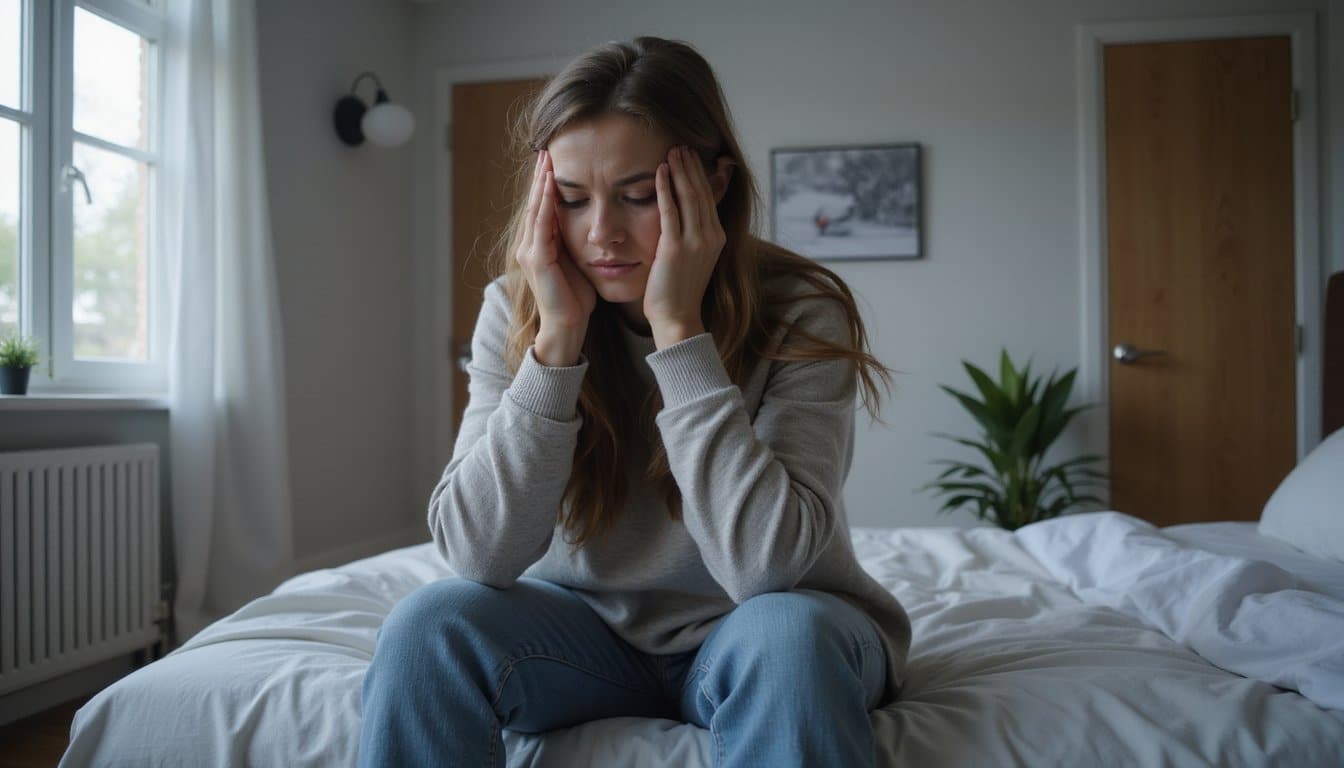
Many people with PTSD find mornings particularly challenging, and the explanation lies in how trauma disrupts your body’s cortisol regulation. Your baseline cortisol levels remain elevated throughout the night when they should decline, creating a foundation for early morning anxiety. When your natural morning cortisol rise occurs, it meets an already-brimming system.
PTSD sleep disturbances compound this pattern. Nightmares trigger additional cortisol surges, and 3 AM spikes activate your sympathetic nervous system, increasing heart rate and blood pressure. You can’t fall back asleep easily after these disruptions. Research shows that the relationship between sleep problems and PTSD symptoms is bidirectional, with each condition worsening the other in a continuous feedback loop.
The cumulative effect means you’re starting each day with depleted rest and heightened arousal. Your nervous system hasn’t recovered overnight, leaving you vulnerable to intrusive thoughts and physical tension from the moment you wake. This exhaustion creates difficulties maintaining relationships and employment, perpetuating the cycle of stress and poor sleep.
Why PTSD Anxiety Peaks at Dawn and Fades by Evening
Because your cortisol system already operates at elevated baseline levels throughout the night, the natural pre-dawn cortisol surge creates a biochemical overflow rather than a gentle awakening. This hormonal spike activates your sympathetic nervous system, triggering ptsd morning symptoms before you’re fully conscious. Research shows that cortisol levels jump 50-60% within 30-45 minutes after waking, which intensifies these symptoms in trauma-sensitive individuals.
Your amygdala responds intensely to this cortisol surge, amplifying fear responses and establishing trauma symptom patterns that define your morning experience:
- Heart rate and blood pressure elevate rapidly upon waking
- Anticipatory dread dominates your first conscious moments
- Racing thoughts impair concentration and decision-making
- Physical symptoms mimic threat responses without actual danger
Early day anxiety diminishes as hours pass because environmental distractions redirect neural activity away from threat-monitoring circuits. By evening, cortisol normalizes, reducing amygdala reactivity considerably. Studies using ecological momentary assessment confirm that deviations from typical sleep duration predict subsequent anxiety, with effects strongest in the morning and afternoon but not evening hours.
The 3 A.M. Cortisol Surge Behind Early Waking

While your body should experience its lowest cortisol levels around midnight, PTSD and C-PTSD disrupt this pattern by maintaining elevated stress hormones throughout the night. When the natural 2-3 AM cortisol rise occurs, your already-elevated baseline creates an “overflowing cup” effect that triggers sympathetic nervous system activation.
| Time | Normal Response | PTSD Response |
|---|---|---|
| Midnight | Lowest cortisol | Elevated baseline |
| 3 AM | Gradual rise | Surge triggers awakening |
| Upon waking | 50% cortisol increase | Blunted increase |
| Morning | Peak 30-45 min post-wake | Anxiety in the morning peaks |
| Treatment | N/A | Morning outpatient mental health care |
This dysregulation increases your heart rate and blood pressure, making sleep resumption difficult once you’re awake. Research shows that PTSD severity is associated with significantly greater cortisol output during the first hour after awakening, further intensifying morning anxiety symptoms. The resulting sleep disruption can impair daytime functioning, making it challenging to maintain relationships, hold a job, or engage in daily activities effectively.
How One Bad Night Makes PTSD Symptoms Spike
Understanding your cortisol patterns explains why you wake at 3 AM, but what happens after that disrupted night determines how severe your symptoms become the following day. Research shows sleeping less than your individual mean triggers measurably higher PTSD symptoms within 24 hours.
The hyperarousal system driving your nighttime waking creates a self-perpetuating cycle:
- Your elevated heart rate during sleep maintains fight-or-flight activation
- Fragmented REM reduces emotional processing capacity
- Morning exhaustion intensifies irritability and concentration deficits
- Stress from poor sleep compounds existing symptom burden
Clinical data indicates fairly bad or very bad sleep quality raises PTSD development risk by 60% over seven years. With 80-90% of PTSD patients experiencing insomnia, one disrupted night doesn’t just affect tomorrow, it maintains posttraumatic anxiety above pathological thresholds and complicates treatment outcomes. Notably, disturbed sleep is the most common symptom reported by individuals diagnosed with PTSD, highlighting why addressing sleep problems is essential to breaking this cycle. Effective treatments exist, including Imagery Rehearsal Therapy for nightmares and cognitive behavioral therapy for insomnia, which can help interrupt this damaging pattern.
Fear of Sleep: The PTSD Pattern Keeping You Awake

When nightmares become a nightly occurrence, you may start avoiding sleep altogether as a protective strategy. This nightmare-driven sleep avoidance develops because your brain begins associating the sleep state itself with danger, research shows 50, 70% of PTSD patients experience nightmares averaging more than five per week, creating a powerful conditioned fear response. The vulnerability you feel during sleep, when your defenses are down, reinforces hypervigilance that keeps you awake even when you’re exhausted. Studies confirm this physiological connection, finding that 63% of individuals with PTSD or PTSD symptoms also suffer from insomnia, highlighting the reciprocal relationship between trauma and sleep disruption. Research on National Guard troops deployed to Iraq found that sleep problems prior to deployment actually predicted later mental health issues, suggesting that disrupted sleep processes emotional memories in ways that lead to increased anxiety.
Nightmare-Driven Sleep Avoidance
Although nightmares affect most people occasionally, they become a clinical concern when trauma transforms sleep into a source of dread rather than restoration. When you’ve experienced trauma, your brain develops conditioned avoidance of sleep itself. Research shows 50, 70% of PTSD patients experience nightmares, with frequency exceeding five episodes weekly.
This nightmare-driven pattern creates measurable consequences:
- Heightened autonomic arousal before sleep onset
- Fear of losing control during vulnerable sleep states
- Maladaptive safety behaviors that perpetuate insomnia
- Prolonged nocturnal awakenings following trauma-related dreams
You may find yourself delaying bedtime or avoiding sleep entirely. Studies indicate fear of sleep correlates strongly with hyperarousal symptoms, independent of other PTSD factors. The interaction between PTSD and insomnia dramatically amplifies this fear, creating a self-reinforcing cycle that exponentially increases daytime dysfunction. Additionally, individuals with PTSD often report higher levels of substance use to cope with sleep difficulties, which paradoxically interferes further with restorative sleep. While nightmares are commonly associated with REM sleep, research shows they can also occur during non-REM sleep in PTSD patients, complicating treatment approaches.
Vulnerability During Sleep State
The shift from wakefulness to sleep requires your nervous system to move from sympathetic to parasympathetic dominance, a neurobiological handoff that PTSD actively disrupts. Your hyperarousal symptoms maintain elevated autonomic activation, preventing the physiological downshift necessary for sleep initiation.
| Risk Factor | Clinical Impact |
|---|---|
| Interpersonal trauma history | Heightened fear of sleep as conditioned helplessness response |
| Comorbid PTSD and insomnia | Maximum fear of sleep severity versus either condition alone |
| Hypervigilance patterns | Active disruption of sleep onset and maintenance |
| Poor baseline sleep quality | 60% increased PTSD development risk over seven years |
When you avoid sleep due to fear, you create a self-perpetuating cycle. Sleep deprivation prevents adequate anxiety reduction, keeping your posttraumatic responses above pathological thresholds and intensifying symptoms during subsequent rest attempts. This cycle explains why residual insomnia serves as a risk factor for both initial PTSD development and relapse following treatment.
Why Flashbacks and Intrusions Worsen After Poor Sleep
Poor sleep creates a measurable increase in intrusive memories following trauma exposure. Research demonstrates a U-shaped relationship between first-night sleep duration and subsequent intrusions. You’ll experience approximately 8.80 intrusive memories weekly with ideal sleep around 6.9 hours, but this number spikes dramatically at sleep extremes.
Key clinical findings on sleep-intrusion patterns:
- Sleeping only 1 hour post-trauma correlates with 20.74 weekly intrusions
- Sleeping 12.5 hours associates with 26.78 weekly intrusions
- First-week intrusion frequency predicts 2-month PTSD diagnosis
- Individuals diagnosed with PTSD report three times more first-week intrusions than non-diagnosed individuals
Fragmented sleep prevents proper memory consolidation, leaving trauma memories disorganized and prone to involuntary retrieval. Your morning flashbacks intensify because nighttime disruptions block restorative sleep phases, amplifying next-day symptom severity. Research shows that higher parietal fast sleep spindles during NREM stage 2 sleep predict fewer intrusive trauma memories in the days following exposure. Some individuals attempt to manage these symptoms by using substances like alcohol or marijuana to fall asleep, but this approach can have negative effects on sleep quality and overall health.
The PTSD Hyperarousal Loop That Blocks Rest
Hyperarousal in PTSD creates a self-reinforcing cycle that actively prevents restorative sleep. Your HPA axis dysfunction disrupts your body’s ability to return to baseline arousal after stress exposure. Low cortisol levels combined with increased CRF secretion prolong your threat responsiveness, keeping your nervous system on high alert throughout the night.
Your amygdala remains hyperactivated, reacting intensely to both threatening and neutral stimuli. This cerebellar-limbic-thalamo-cortical network stays excessively engaged, responding even to subliminal threat cues you’re not consciously aware of. Your nervous system can’t habituate to aversive stimuli, preventing the downregulation needed for rest.
The physiological consequences compound nightly. Elevated heart rate, increased skin conductance, and autonomic dysregulation persist across sleeping periods. These sleep disturbances resist treatment even after trauma-focused therapy, making targeted physiological interventions essential.
Why Fixing Sleep First Can Calm Daytime Symptoms
Something as fundamental as your sleep duration directly predicts how severe your PTSD and anxiety symptoms will be the following morning. Research shows that sleeping less than your personal average on any given night elevates next-day anxiety most prominently in morning hours. This effect persists regardless of your chronic sleep patterns.
Targeting sleep disruptions first addresses the root cause of daytime symptom escalation:
- Correcting cortisol-spike awakenings prevents morning symptom overflow
- Maintaining consistent sleep duration above your personal average mitigates morning anxiety peaks
- Reducing nighttime hyperarousal decreases overall PTSD symptom intensity
- Treating insomnia symptoms lowers average weekly anxiety levels
Short sleep specifically links to increased intrusion symptoms the following day. By prioritizing sleep interventions, you’ll interrupt the cycle where poor rest amplifies all four PTSD symptom clusters.
What Your Rough Mornings Are Actually Telling You
Research shows distressing dreams occurring closer to your wake time predict stronger next-day emotional intensity. If you’re experiencing morning intrusions, avoidance, or mood disturbances, data confirms shorter sleep duration and longer sleep onset the prior night directly forecast these clusters.
Sex differences matter here: women show stronger links between poor sleep efficiency and next-day symptom severity. Your rough mornings aren’t random, they’re measurable consequences of circadian disruption and overnight processing failures that morning IOP can directly address.
PTSD and anxiety often hit hardest in the morning, making early intervention a powerful part of recovery. At Quest Wellness Center, our morning IOP is built to address these symptom patterns head-on, with personalized, evidence-based treatment plans tailored to what you are experiencing. Our flexible morning, afternoon, and evening programs ensure consistent support fits seamlessly into your day. Call +1 (818) 275-9810 today and take the first step toward reclaiming your mornings.
Frequently Asked Questions
Can Caffeine Consumption Worsen Morning PTSD Symptoms or Anxiety Spikes?
Yes, caffeine can worsen your morning PTSD symptoms and anxiety spikes. When you consume caffeine, it antagonizes adenosine receptors, triggering physical sensations like rapid heartbeat, sweating, and trembling that mimic panic symptoms. If you have panic disorder, you’re 31 times more likely to experience caffeine-induced panic attacks. Research shows caffeine aggravates PTSD-like symptoms and anxiety-related behaviors. Your genetic makeup (ADORA2A polymorphisms) may also increase your vulnerability to caffeine-induced anxiety.
Do Certain Medications Affect the 3 A.M. Cortisol Surge Differently?
Yes, certain medications affect nighttime cortisol differently. D-cycloserine attenuates cortisol response more profoundly than alprazolam or placebo, enhancing fear extinction. SSRIs like sertraline and citalopram reduce PTSD symptoms but don’t markedly alter cortisol levels. Research shows medication effects interact with gender, you may respond differently based on biological factors. Your prescriber should monitor how your specific medication regimen impacts HPA axis function and those disruptive 3 a.m. cortisol surges.
How Long Does It Take for Sleep Improvements to Reduce PTSD Symptoms?
You’ll typically notice early sleep shifts by the third week of treatment, though full relief takes longer. Research shows trauma-focused therapies like CPT and PE produce large effects on insomnia and nightmare severity within 6 weeks. Adding sleep interventions to standard PTSD therapy improves outcomes by approximately 30%. These improvements create a positive cycle, better sleep reduces daytime PTSD symptoms, with gains maintained through 9-month follow-up periods.
Are Morning Symptoms Worse for Combat Veterans Versus Childhood Trauma Survivors?
Research doesn’t show one group consistently experiences worse morning symptoms than the other. You’ll find both combat veterans and childhood trauma survivors struggle with sleep disturbances, nightmares, and morning fatigue. However, if you’ve experienced both childhood abuse and combat exposure, you’re likely facing multiplied symptom severity, not just additive effects. Your morning irritability, alertness problems, and exhaustion may intensify because dual-trauma compounds neurobiological changes in your amygdala, hippocampus, and prefrontal cortex.
Can Napping During the Day Help or Hurt Nighttime PTSD Sleep Problems?
Daytime napping typically hurts your nighttime sleep when you’re managing PTSD. Naps can strengthen fear memory consolidation rather than promoting extinction, potentially increasing intrusive memories and nightmares. They also disrupt your sleep-wake cycle, perpetuating insomnia patterns and preventing the restorative REM sleep you need for emotional processing. Research shows that structured sleep hygiene practices and targeted treatments like cognitive behavioral therapy for insomnia reduce PTSD symptoms more effectively than compensatory daytime sleep.