





Even the Strongest Feel Vulnerable
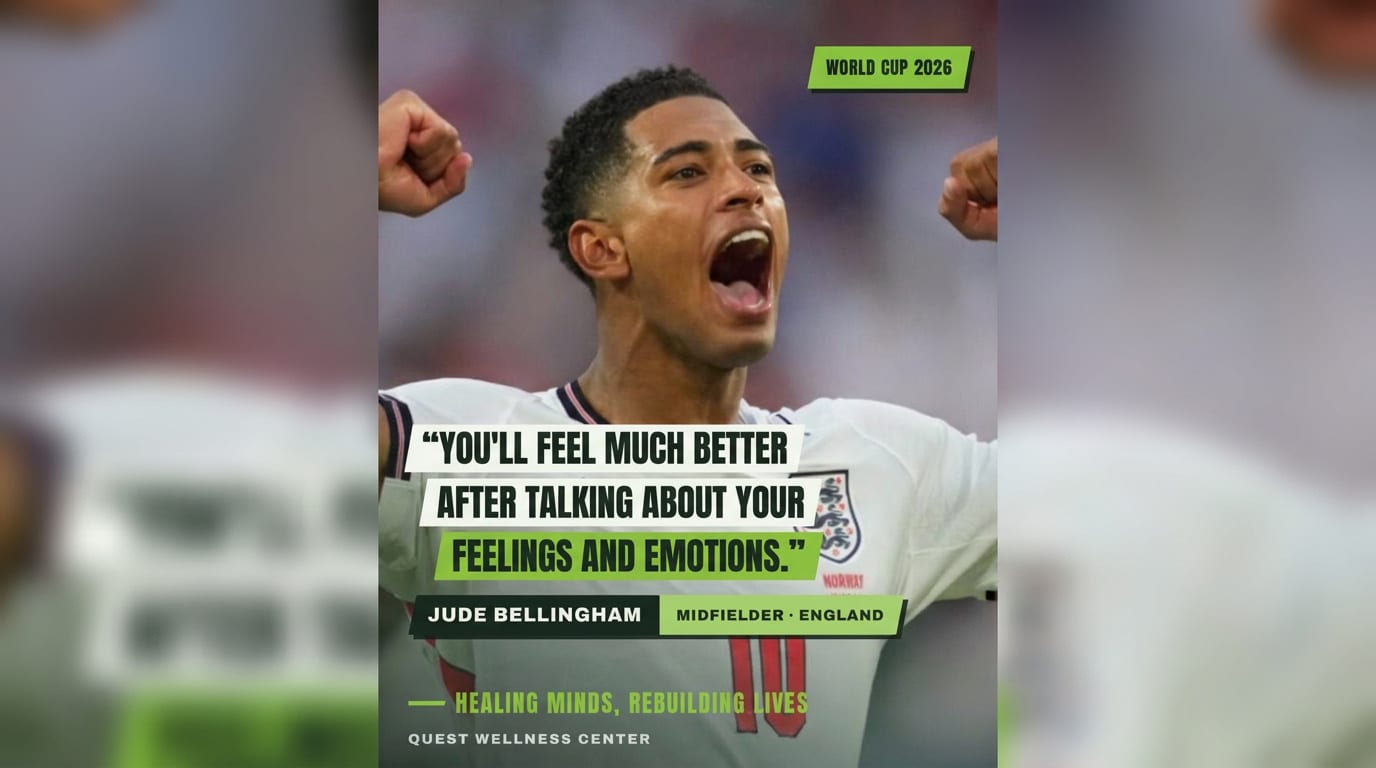
It’s easy to look at elite athletes and assume they have it all figured out. The talent, the success, the crowds. Surely people at that level don’t struggle the way the rest of us do. But that image isn’t the reality, and some of them have been brave enough to say so.
England and Real Madrid midfielder Jude Bellingham, one of the best footballers in the world, has spoken openly about feeling vulnerable and doubting himself. In interviews around World Mental Health Day, he described times he needed someone to talk to but instead tried to keep up a tough, “I don’t need anyone” image. His point was simple and honest: the truth is that everyone needs support sometimes, and people feel better when they actually talk about their feelings.
If someone performing at the highest level in world sport can admit that, it puts a big dent in the idea that needing to talk means you’re weak.
Why Talking About Your Feelings Is Strength

Opening up when you’re struggling isn’t the easy path. It’s the hard one, and that’s exactly why it takes strength. Staying silent, pushing it down, pretending everything is fine, that’s often the reflex. Choosing to be honest about what you’re feeling takes real courage.
There’s a persistent stigma, especially around the idea that admitting you need help somehow makes you less capable. It doesn’t. It takes far more strength to say “I’m not okay, and I could use some support” than to keep performing a version of yourself that’s holding it all in. Vulnerability isn’t the opposite of strength. It’s one of its clearest forms.
Your mind is part of the squad. Talking about your feelings is strength, not weakness.
The Power of Not Facing It Alone
One of the most damaging parts of struggling silently is the isolation that comes with it. When you keep everything inside, it’s easy to feel like you’re the only one going through it, and that feeling makes everything heavier.
The truth is that no one has to face difficult moments alone. Reaching out, whether to a friend, a family member, or a professional, breaks that isolation and reminds you that support is there. Bellingham even pointed to how sport naturally brings people together and gives them someone to talk to when life isn’t going well. Connection like that isn’t a luxury. It’s part of how people get through hard times, and it’s available to anyone willing to reach for it.
When to Reach Out for Support
You don’t have to be in crisis to deserve support. Talking to someone is valuable at many different points, not just at rock bottom. A few signs it might be time to reach out:
- You’re doubting yourself more than usual. Persistent self-doubt or feeling not good enough is worth talking through.
- You’re holding it all in. If you’re keeping a tough front while struggling underneath, that weight is worth sharing.
- You feel isolated. Feeling alone in what you’re going through is one of the clearest reasons to reach out.
- Stress or pressure feels like too much. When the demands on you start to feel overwhelming, support helps.
- You just need someone to talk to. That reason alone is enough. You don’t need to justify it.
Reaching out early, before things reach a breaking point, is one of the strongest and most proactive things you can do for yourself.
Healing Minds, Rebuilding Lives

Asking for help is the brave first step, and having the right support makes all the difference. That’s what we’re here for at Quest Wellness Center. We provide a supportive space to talk through what you’re facing, without judgment, so you don’t have to carry it alone.
Whether you’re dealing with anxiety, self-doubt, overwhelming pressure, or simply need someone to talk to, reaching out is a sign of strength, not weakness. Your mental health is part of your team, and taking care of it is one of the most important things you can do. No one should have to face difficult moments on their own, and with the right support, you don’t have to.
Reach Out Today and Take the First Step
Speaking up is strength, and you don’t have to face what you’re going through alone. At Quest Wellness Center, we’re here to help you heal your mind and rebuild your life with compassionate, professional support. Located at 10736 Burbank Blvd, North Hollywood, CA 91601. Call (818) 275-9810 today and take the first step, because your mind is part of the squad, and no one has to do this alone.
Frequently Asked Questions
Is talking about your feelings really a sign of strength?
Yes. Opening up about what you’re struggling with takes real courage, because staying silent is often the easier reflex. Choosing honesty and asking for support shows self-awareness and strength, not weakness. Even elite athletes like Jude Bellingham have spoken publicly about how much better people feel when they talk about their emotions.
Why is there still a stigma around mental health?
Much of the stigma comes from an outdated belief that needing help makes a person less capable, especially in high-pressure environments. Many people, including public figures and athletes, are now speaking openly to challenge that idea and show that everyone needs support sometimes. The more openly it’s discussed, the more that stigma fades.
When should I reach out for mental health support?
You don’t have to be in crisis to seek support. It can help any time you’re feeling persistent self-doubt, holding everything in, feeling isolated, struggling with overwhelming stress, or simply needing someone to talk to. Reaching out early, before things reach a breaking point, is a proactive and healthy choice.
What if I feel like I should be able to handle it on my own?
That feeling is common, but it isn’t true. Everyone needs support at times, no matter how strong or successful they are. Trying to carry everything alone often makes struggles heavier. Asking for help isn’t a failure to cope. It’s one of the most effective and courageous ways to take care of yourself.
How can Quest Wellness Center help?
Quest Wellness Center provides a supportive, judgment-free space to talk through anxiety, self-doubt, pressure, and other challenges. With compassionate, professional care focused on healing minds and rebuilding lives, we help people feel supported and less alone. You can reach out by calling (818) 275-9810.