Verify Insurance
Fast • Secure • Confidential
Speak with our team today
Valley Glen shares its edge with Quest Wellness Center, a Joint Commission accredited outpatient dual diagnosis program just inside North Hollywood, reachable in person on a short local trip or attended over secure California video. The program treats a mental health condition and a co-occurring substance use disorder in one plan, across morning, afternoon, and evening tracks through PHP, IOP, and outpatient care.
Valley Glen has few programs of its own, yet a dedicated dual diagnosis program sits right on its edge. Quest is at 10736 Burbank Blvd, North Hollywood, CA 91601, along the line Valley Glen shares with it, which puts intensive outpatient care within a short local trip for most of the neighborhood, making it one of the closest options around.
That closeness is no minor thing for co-occurring conditions, where treatment tends to mean several visits a week for a while. A program you can get to quickly is one you are likelier to start and to finish, and for anyone who would rather stay put, every level of care also runs by secure California telehealth.
Valley Glen itself is mostly residential, the stretch between Victory and Burbank Boulevard, and it has never carried much clinical infrastructure of its own. Residents are used to leaving the neighborhood for anything specialized, which is exactly why a dedicated program sitting on its border, rather than across a freeway, changes the calculation about starting.
Because the program is so close and so easy to begin, one of the usual reasons people stall never gets a foothold here. Co-occurring conditions tend to worsen the longer they run, each side driving the other, so a nearby program that makes starting simple can change how the whole thing goes. Quest pairs a facility on the Valley Glen line with an admissions process that checks insurance quickly and can often set up a prompt start. For a resident who has been putting treatment off because it felt distant or complicated, being close and easy to begin removes two of the reasons people most often wait.
To state it directly, dual diagnosis is what you have when a psychiatric condition and an addiction occur in the same person and shape each other’s course. On one side is the psychiatric condition, a depression, an anxiety problem, a bipolar pattern, ADHD, or the mark left by trauma; on the other, the drinking or the drug. The reason the two make one diagnosis is the link between them, each condition worsening the other in turn. Deal with just one and the other tends to reverse the progress, and that is exactly why they are treated together on one plan by one team.
A board-certified psychiatrist leads the medication and keeps it tied to the substance use work, because a prescriber who cannot see the addiction may reach for something that quietly undoes the recovery. Seeing everything at once, the psychiatrist can target a prescription at the force behind the use, a deadened mood, an unshakable anxiety, the highs and lows of bipolar disorder, ADHD, or sleep in ruins, easing it until the therapy can take hold. Should the substance use disorder have an approved medication of its own, that too becomes part of the plan, and medication is never a replacement for therapy but a partner to it.
Which method gets used comes down to the specific pairing, not a standard checklist. In CBT the aim is to sever the feedback between the mood and the use; the capacity to hold a hard feeling without a substance is built with Dialectical Behavior Therapy; a person’s real readiness is the starting point for Motivational Interviewing. For use that grows out of an old trauma, the treatment turns to EMDR and other trauma-focused work aimed right there. Most of the week is dedicated to topic-focused group work, while individual sessions address more personal concerns. ACT, SFBT, psychodynamic therapy, and coordinated TMS care through Breakthrough TMS may be added when appropriate. Every group at Quest is led by a master’s-level therapist, supervised by licensed clinicians.
Quest runs three outpatient levels, and where a client from Valley Glen starts depends on how much the two conditions are disrupting daily life.
PHP | IOP | OP | |
Weekly load | Several hours, most weekdays | Fewer hours across the week | Lightest, spaced sessions |
Fits | Needing daily structure to stabilize | Holding a job through treatment | Maintaining gains |
Tracks | Daytime | Morning, afternoon, evening | Flexible |
Format | In-person or telehealth | In-person or telehealth | In-person or telehealth |
Partial Hospitalization is the most intensive, for people who need daily structure to steady both conditions. The intensive outpatient program in North Hollywood steps down to fewer weekly hours across morning, afternoon, and evening tracks while allowing Valley Glen residents to maintain more of their regular daily routine. Outpatient maintains progress once things settle. The same team carries you across all three, and most clients step down through them as they stabilize.
The signal to move past weekly therapy tends to live in the recent record rather than a single day. Gains that vanish the moment using stops, a session repeatedly crowded out, an honest word from someone close, are minor apart and decisive together, marking where an occasional hour yields to a program running through the week. The intake assessment settles which level, in confidence and at no cost.
Quest Wellness Center accepts most commercial PPO plans with out-of-network benefits, and we verify your coverage before treatment begins. Use the Verify Insurance module on this page and we will confirm your benefits, usually within about fifteen minutes.
The facility is at 10736 Burbank Blvd, North Hollywood, CA 91601, right on the Valley Glen line and a short local trip for most of the neighborhood, and the Get Directions link below opens the route from where you are. Nearby clients can also review dual diagnosis treatment in Valley Village and dual diagnosis treatment in Sun Valley. For treatment options across the wider area, see dual diagnosis treatment in Los Angeles. For anyone who would rather stay home, the same program runs by telehealth statewide. If medical stabilization is needed first, it comes before this level of care: Quest does not run inpatient detox, so the team coordinates it with Quest 2 Recovery, our own program, and brings you into integrated care afterward.
Quest Wellness Center sits right on the Valley Glen line at 10736 Burbank Blvd, North Hollywood, CA 91601, one of the closest options for the neighborhood, with secure telehealth also available.
Often quickly. Admissions can verify insurance fast and, with the facility right on the Valley Glen line, set up a prompt start, which matters since co-occurring conditions worsen the longer they go untreated.
Length follows clinical need rather than a set calendar. A typical Valley Glen course runs several weeks through PHP or IOP, stepping down as both conditions steady, with the program’s closeness making the full course easy to actually complete.
Yes. IOP and outpatient run morning, afternoon, and evening tracks, and being on the Valley Glen line makes in-person easy to fit around a job.
Yes. A board-certified psychiatrist directs medication from inside the team, treating a Valley Glen client’s depression, anxiety, bipolar disorder, ADHD, or sleep trouble, on the neighborhood line or by video, with therapy always beside it.
For Valley Glen clients, Quest treats depression, anxiety, PTSD and complex trauma, bipolar disorder, and ADHD when they occur alongside alcohol or drug use. Whatever the pairing, both conditions are treated on one plan by one team.
With the program on the neighborhood line, starting is simple. Call (818) 275-9810 or verify insurance above, and admissions books the assessment promptly.
Verify Insurance
Fast • Secure • Confidential
Speak with our team today

MD, Board-Certified Psychiatrist
Marriage and Family Therapist Associate, MA
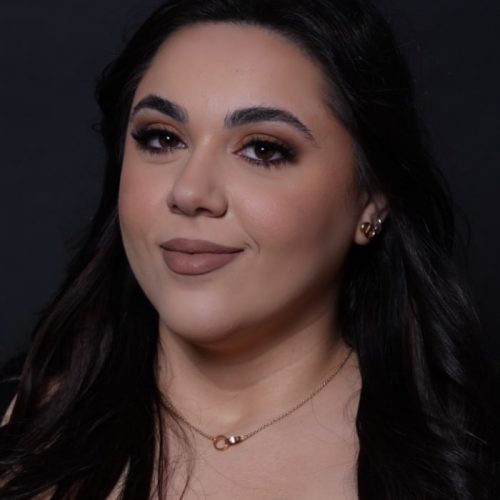
Medically reviewed by Dr. Neda Javaherian, MD, Board-Certified Psychiatrist, and Verta Keshishyan, AMFT (Associate Marriage and Family Therapist), registered with the California Board of Behavioral Sciences and supervised by Ari Labowitz, LMFT. Verta has three years of experience with the Department of Mental Health supporting low-income families and families in crisis.
We specialize in treatments for mental health issues and co-occurring disorders.
We concentrate on mental health treatments and co-occurring conditions.
We provide a personalized approach to care.
We possess many years of relevant experience and a strong track record of success.
Every group is led by a master’s-level therapist.
Our partial hospitalization and intensive outpatient programs provide choices for morning, afternoon, or evening sessions.
We offer case management grounded in clinical evidence.
Experience a secure setting that allows you to concentrate on healing and maintaining a healthy way of life.
We provide opportunities to engage with individuals at every phase of recovery.
We accept most commercial PPO plans with out-of-network benefits. Coverage and costs vary by plan, and we verify your benefits before treatment.
We accept most commercial PPO plans with out-of-network benefits. Coverage and costs vary by plan, and we verify your benefits before treatment.