
Verify Insurance
Fast • Secure • Confidential
Speak with our team today
IOP in North Hollywood is Quest Wellness Center’s core program, run on site at 10736 Burbank Boulevard rather than from somewhere across town. Search iop North Hollywood and this is the facility itself, not a listing pointing elsewhere. The program treats depression, anxiety, PTSD, trauma, and co-occurring substance use across morning, afternoon, and evening tracks, running 3 to 4 hours a day, 3 to 5 days a week, in person or virtually across California.
This is where Quest actually is. Not a satellite office, not a mailing address, but the building where the clinical team works and where in-person groups meet, at 10736 Burbank Boulevard in the heart of North Hollywood. Every other area Quest serves is measured as a drive to this address. For people who live in North Hollywood, there is no drive to weigh, which takes the commute, a common reason people start missing sessions, out of the equation entirely.
The location sits near the 101, 170, and 134, in the NoHo Arts District end of the Valley, a short local trip from anywhere in the neighborhood. For anyone who still prefers to attend from home, the same program runs virtually across California, and you can move between in-person and virtual as the week calls for it. Over the hill on the Westside, that same virtual program runs as virtual IOP for Century City.
IOP is a level of care between weekly therapy and a partial hospitalization program. It runs 9 to 20 clinical hours a week through structured group work, individual therapy, and case management, while you keep living at home and holding down work or school.
People reach it two ways. Some step down from a partial hospitalization program or a residential stay as symptoms stabilize and the intensity can safely drop. Others step up from weekly therapy that has helped but is no longer matching what they are dealing with. Anyone in acute crisis, active withdrawal, or needing 24-hour supervision needs a higher level of care first, and the admissions team will direct you there rather than place you where the fit is wrong.
Quest treats mental health and any co-occurring substance use in a single plan instead of tackling them one at a time. The main focuses are depression, anxiety and panic, PTSD and complex trauma, personality and mood disorders, suicidal ideation, and dual diagnosis.
The reason for one combined plan is straightforward. Treat the depression and leave the drinking that built up beside it, and the drinking drags the depression back down. Treat the substance use and leave the trauma underneath it, and relapse stays close. The approach that lasts works on both together.
Quest runs morning, afternoon, and evening tracks, all clinically identical, differing only by the hour they meet. The choice is about the shape of your day rather than the content of the treatment.
Morning suits people who want treatment done before work or who do better early. Afternoon fits parents around school pickup and anyone stepping down from a higher level who wants a middle slot. Evening runs for people working a full day, and living in North Hollywood makes it easy to attend after hours and be home in minutes. The clinical content is the same in every track.
Length of stay follows your clinical progress rather than a set number of weeks, and your therapist sets and revises that timeline with you.
The week is built from clinical groups, individual therapy, and case management across 3 to 5 days. Groups do the bulk of the clinical work, each with a defined focus rather than open discussion: psychoeducation, relapse prevention, co-occurring disorders, and process sessions in rotation.
Individual therapy is your private time with a licensed clinician, used to work through what surfaces in group. Case management handles the practical layer, coordinating outside care and turning session work into something that holds at home. On-site medication management is available when a plan calls for it.
The core methods are Cognitive Behavioral Therapy, Dialectical Behavior Therapy, Motivational Interviewing, and trauma-informed practice. CBT works on the thought patterns beneath mood symptoms and hands you ways to interrupt them. DBT builds distress tolerance and emotional regulation for feelings that move faster than you can hold. Motivational Interviewing meets your readiness to change where it genuinely stands.
Trauma-informed groups run throughout, drawing on evidence-based methods that build understanding and resilience through a strengths-focused approach rather than sending you back through the event. The wider set adds EMDR, Acceptance and Commitment Therapy, Solution-Focused Brief Therapy and psychodynamic therapy.
Living in the same neighborhood as your treatment changes how it fits into life. There is no freeway to factor in, no window of the day lost to traffic, and no version of the week where a long commute becomes the excuse to skip a session. For a program you attend three to five times a week over weeks at a stretch, that proximity is not a small thing.
It also makes the after-hours side of care easier to sustain. Community groups, peer support, a prescriber you already see, the ordinary scaffolding that keeps progress standing once clinical hours end, all of it stays close and reachable. Case management builds those local connections into your plan from the first week rather than leaving them to sort out at discharge.
The signs tend to show up in how life is running rather than on a diagnostic form. Sessions get cancelled because the week overran. Work slips in a way people start to notice. Sleep or appetite changed a while ago and never came back. Someone close said something outright instead of hinting. Individually none is decisive, but together they point to a weekly hour no longer holding the weight.
The intake assessment is there to sort exactly that out. It reviews your symptom history, past treatment, current medications, and what you need a program to do, then gives a clear read on whether IOP fits or whether a heavier or lighter level is the better call. Asking costs nothing and stays confidential. This is the facility behind our mental health IOP in Los Angeles and, a short drive over Cahuenga Pass, our intensive outpatient program for Hollywood.
Quest serves people across a wide slice of Los Angeles, much of it virtually or as a drive in, but North Hollywood is where the program physically lives. It is the room the in-person groups meet in and the place the clinical team keeps its hours. For anyone weighing a program from further out, this is the actual address behind it, not an intake desk forwarding calls somewhere else.
For someone who lives here, that means the shortest possible distance between deciding to get help and being in the room. There is no pass to cross, no basin to sit in at rush hour, no calculation about whether the commute is worth it on a hard day. The program is a local one in the plainest sense, down the road, and that plainness is part of what makes it easier to stay with.
Quest Wellness Center accepts most commercial PPO plans with out-of-network benefits, and we verify your coverage before treatment begins. What you pay depends on your plan, deductible, and coinsurance.
That check runs about fifteen minutes over the phone. Where you land in the plan year moves the number more than anything, which is why two people on one track can owe very different amounts. Under most policies virtual sessions are billed just as in-person ones are, though yours is the policy that decides. Drop your carrier and member ID into the form here to get going.
PHP | IOP | |
Hours per day | 5 to 6 hours | 3 to 4 hours |
Days per week | 3 to 5 days | 3 to 5 days |
Best for | Near-daily structure without an overnight stay | Keeping work or school going during treatment |
Location | On site in North Hollywood or virtual | On site in North Hollywood or virtual |
Scheduling | Daytime | Morning, afternoon, or evening |
PHP is the heavier level, for symptoms needing near-daily contact short of residential care. IOP is the lighter step, for people stable enough to manage their own days on fewer clinical hours. Most people travel PHP, then IOP, then outpatient, with every move keyed to progress rather than the calendar.
On site at 10736 Burbank Boulevard in North Hollywood, near the 101, 170, and 134, in the NoHo Arts District end of the Valley.
The actual facility. This is where the clinical team works and where in-person groups meet, not a satellite or an intake number for somewhere else.
Three to four hours a day, three to five days a week, which comes to 9 to 20 clinical hours.
Yes. Virtual IOP runs the same clinical structure across California, so you can complete it from home if you prefer, though the facility is right here for in-person care.
Yes. The evening track runs for people working days, with the same clinical content as the morning and afternoon tracks.
Quest Wellness Center accepts most commercial PPO plans with out-of-network benefits, and we verify your coverage before treatment begins. What you pay depends on your plan, deductible, and coinsurance.
No. IOP is not detox and Quest does not provide detox. If you need medical detox first, the team helps you arrange it with an appropriate provider before you start here.
PHP runs 5 to 6 hours a day for people needing near-daily structure. IOP runs 3 to 4 hours a day for people managing more on their own.
Call (818) 275-9810 or send the verification form. Admissions confirms your coverage and books the assessment that sets the level of care.
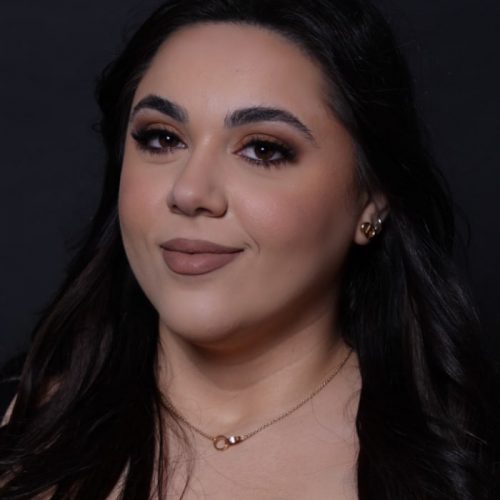
Marriage and Family Therapist Associate, MA
Medically reviewed by Verta Keshishyan, AMFT (Associate Marriage and Family Therapist), registered with the California Board of Behavioral Sciences and supervised by Ari Labowitz, LMFT. Verta has three years of experience with the Department of Mental Health supporting low-income families and families in crisis.
We specialize in treatments for mental health issues and co-occurring disorders.
We concentrate on mental health treatments and co-occurring conditions.
We provide a personalized approach to care.
We possess many years of relevant experience and a strong track record of success.
Every group is led by a master’s-level therapist.
Our partial hospitalization and intensive outpatient programs provide choices for morning, afternoon, or evening sessions.
We offer case management grounded in clinical evidence.
Experience a secure setting that allows you to concentrate on healing and maintaining a healthy way of life.
We provide opportunities to engage with individuals at every phase of recovery.
We accept most commercial PPO plans with out-of-network benefits. Coverage and costs vary by plan, and we verify your benefits before treatment.
We accept most commercial PPO plans with out-of-network benefits. Coverage and costs vary by plan, and we verify your benefits before treatment.