
Verify Insurance
Fast • Secure • Confidential
Speak with our team today
IOP in Los Angeles at Quest Wellness Center treats adults managing depression, anxiety, PTSD, trauma, and co-occurring substance use who need structure beyond weekly therapy but not 24-hour care. Sessions run 3 to 4 hours a day, 3 to 5 days a week, with morning, afternoon, and evening tracks in person in North Hollywood or virtually across California.
IOP fits adults who are medically stable but need more support than a weekly therapy hour provides. Two paths lead here. Some step down from a partial hospitalization program as symptoms settle and fewer clinical hours make sense. Others step up from standard outpatient therapy when weekly sessions stop holding. Across Los Angeles that second group tends to be working adults, parents, and students, people whose lives cannot pause for treatment but whose symptoms have outgrown once-a-week care.
The program treats mental health and substance use in one plan rather than sequencing them. Depression, anxiety, PTSD, and trauma get addressed alongside any co-occurring substance use, because separating them tends to leave whichever goes untreated pulling against the other. IOP is not the right level for anyone in acute crisis or needing round-the-clock supervision, and our admissions team will help you find a higher level of care if that is where you are. For Valley residents, that same program runs on site as our intensive outpatient program in North Hollywood.
Quest runs morning, afternoon, and evening IOP tracks, and the clinical content is identical across all three. Only the timing changes. You pick the track that fits your work, school, or family obligations, and you get the same groups, the same individual therapy, and the same case management as everyone else.
The evening track matters most in Los Angeles, where a commute can eat two hours of a day. Evening sessions let you hold a full-time job and still get 9 to 20 hours of clinical care a week. Morning suits people who want treatment before the workday or who function best early. Afternoon works for parents around school hours and for anyone stepping down from PHP who wants a middle option.
Length of stay is set by clinical progress, not a fixed calendar. Your therapist reviews where you are and sets the timeline with you.
Your first week starts with a clinical assessment that sets your treatment plan and confirms IOP is the right level. From there you join your chosen track and begin the standard weekly structure of groups, individual therapy, and case management. The assessment covers your symptom history, any prior treatment, current medications, and what you need the program to do for you. Most people find the first two or three sessions are largely about orientation, meeting the group, and getting a feel for the rhythm before the clinical work deepens. Your therapist checks in during the first week to adjust anything that is not fitting, whether that means changing tracks, adjusting the individual therapy schedule, or coordinating with an outside prescriber.
A week combines clinical groups, individual therapy, and case management across 3 to 5 days. Group work is the core. Sessions rotate through psychoeducation, relapse prevention, co-occurring disorders, and process-oriented work, so each meeting has a defined focus instead of repeating the same ground.
Individual therapy gives you private time with a licensed clinician to work through what surfaces in group and to move on personal goals. Case management, grounded in clinical evidence, handles the practical side: coordinating care, applying new skills at home and at work, planning for what comes after the program. Medication management is available on site when a treatment plan calls for it.
Groups and individual sessions draw on Cognitive Behavioral Therapy, Dialectical Behavior Therapy, Motivational Interviewing, and trauma-informed practice. CBT targets the thought patterns driving mood symptoms and substance use, and gives clients concrete tools to interrupt them. DBT builds emotion regulation and distress tolerance for people dealing with intense emotional swings. Motivational Interviewing strengthens commitment to change at whatever stage you are in.
Trauma-informed groups run throughout the program. They use evidence-based interventions to help you understand your symptoms and build resilience through a strengths-focused approach, rather than requiring you to re-live what happened. Quest also offers EMDR, Acceptance and Commitment Therapy, Solution-Focused Brief Therapy and psychodynamic therapy.
Our IOP treats mental health conditions and co-occurring substance use together. Common focuses include:
If you are unsure whether what you are dealing with fits our IOP, call (818) 275-9810 and the team will talk it through.
Quest Wellness Center is at 10736 Burbank Blvd in North Hollywood, and serves residents across downtown Los Angeles, Hollywood, Beverly Hills, Santa Monica, Pasadena, Long Beach, Glendale, Burbank, Torrance, and surrounding neighborhoods. From the San Fernando Valley the facility is reachable via the 101 and 170. From the Westside the 101 connects through Cahuenga Pass.
Within the San Fernando Valley the program draws from Sherman Oaks, Studio City, Van Nuys, Valley Village, Toluca Lake, Burbank, Encino, and Panorama City, most within a 20-minute drive outside peak hours.
Virtual IOP runs across California on secure platforms and follows the same clinical structure as on-site care. For anyone on the Westside, in the South Bay, or facing a commute that would make in-person attendance unrealistic, the virtual track delivers the same groups, the same individual therapy, and the same case management from home. You can move between formats if your circumstances change, and hybrid attendance is available.
Quest Wellness Center accepts most commercial PPO plans with out-of-network benefits, and we verify your coverage before treatment begins. What you pay depends on your plan, deductible, and coinsurance.
Cost is the question most people ask first, and the honest answer is that it depends on your plan. Two people with the same diagnosis attending the same track can pay very different amounts depending on deductible status, coinsurance percentage, and whether the plan has an annual out-of-pocket maximum you have already met. Verification takes about 15 minutes. We tell you what your plan covers before you commit to anything.
To verify, the form on this page asks for your insurance provider and member ID. Admissions checks your coverage and explains what to expect in plain terms, with no obligation. Call (818) 275-9810 or submit the form to get exact numbers for your plan.
PHP | IOP | |
Hours per day | 5 to 6 hours | 3 to 4 hours |
Days per week | 3 to 5 days | 3 to 5 days |
Best for | Near-daily structure without overnight care | Holding work or school alongside treatment |
Lives at home | Yes | Yes |
Scheduling | Daytime | Morning, afternoon, or evening |
PHP is the right level when symptoms need near-daily structure but not an overnight stay. IOP is right when you can manage work or school and need fewer clinical hours. Most people step down from our PHP into IOP, then into our outpatient program as they stabilize.
IOP is the middle level of Quest’s continuum, which runs PHP to IOP to outpatient. PHP is most structured at five to six hours a day for people needing close support without overnight care. IOP steps down to three or four hours across three to five days for people stable enough to manage daily life while still needing substantial clinical contact. The outpatient program is lightest, a few hours a week for people maintaining recovery independently.
Most people move through in sequence. Others enter directly at IOP when that matches their needs. Stepping down gradually rather than ending treatment abruptly is the point, and the clinical team recommends each move based on progress.
Sessions run 3 to 4 hours a day, 3 to 5 days a week, which works out to 9 to 20 clinical hours weekly. You choose morning, afternoon, or evening.
Yes. The evening track exists for exactly that, and morning sessions work for people who prefer treatment before the workday. Clinical content is the same across all three tracks.
Length is set by clinical progress rather than a fixed number of weeks. Your therapist sets the timeline with you, and you can step down to our outpatient program as you stabilize.
IOP is not a detox program and Quest does not provide detox. If you need medical detox first, our team will help you arrange it with an appropriate provider before you begin here.
Quest Wellness Center accepts most commercial PPO plans with out-of-network benefits, and we verify your coverage before treatment begins. What you pay depends on your plan, deductible, and coinsurance.
Yes. Virtual IOP runs across California and follows the same clinical structure as in-person care, so you can attend from home anywhere in Los Angeles County.
PHP runs 5 to 6 hours a day for people needing near-daily structure. IOP runs 3 to 4 hours a day for people who can manage more independence.
Call (818) 275-9810 or use the insurance verification form on this page. Admissions will verify benefits and schedule an assessment to confirm IOP is the right level for you.
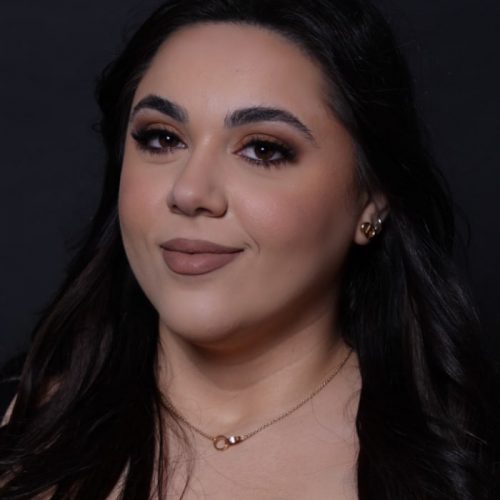
Marriage and Family Therapist Associate, MA
Medically reviewed by Verta Keshishyan, AMFT (Associate Marriage and Family Therapist), registered with the California Board of Behavioral Sciences and supervised by Ari Labowitz, LMFT. Verta has three years of experience with the Department of Mental Health supporting low-income families and families in crisis.
We specialize in treatments for mental health issues and co-occurring disorders.
We concentrate on mental health treatments and co-occurring conditions.
We provide a personalized approach to care.
We possess many years of relevant experience and a strong track record of success.
Every group is led by a master’s-level therapist.
Our partial hospitalization and intensive outpatient programs provide choices for morning, afternoon, or evening sessions.
We offer case management grounded in clinical evidence.
Experience a secure setting that allows you to concentrate on healing and maintaining a healthy way of life.
We provide opportunities to engage with individuals at every phase of recovery.
We accept most commercial PPO plans with out-of-network benefits. Coverage and costs vary by plan, and we verify your benefits before treatment.
We accept most commercial PPO plans with out-of-network benefits. Coverage and costs vary by plan, and we verify your benefits before treatment.