
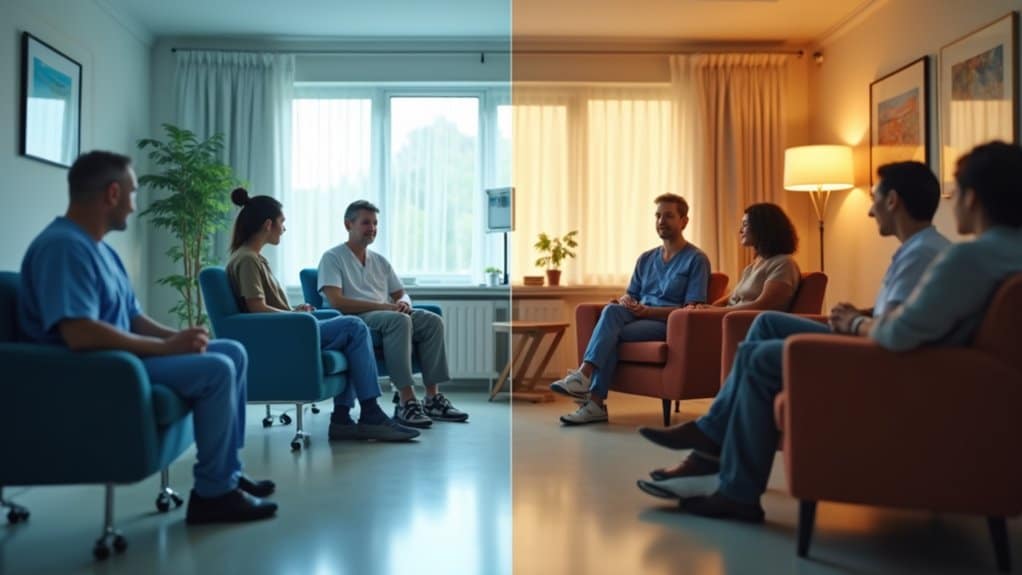


Virtual IOP is a strong fit if you’re managing mild-to-moderate depression, anxiety, or co-occurring conditions and can engage consistently from a private, stable space with reliable internet. Research shows 65, 75% of participants achieve measurable symptom reduction, with attendance rates reaching 89.5%. However, it’s not appropriate if you’re experiencing active suicidal ideation or lack access to the technology required for uninterrupted participation. Understanding the specific factors below will help you determine your best path forward.
What a Typical Day in Virtual IOP Looks Like

When you’re considering virtual IOP, understanding what a typical day looks like can help you decide whether it’s the right fit. Most programs run three to five days weekly, delivering nine to twelve structured hours. Your day typically begins with a check-in where clinicians assess your safety and current state.
From there, you’ll move through psycho-education sessions, coping skills training, and process groups, the core components determining who qualifies for virtual IOP. Experiential therapies like mindfulness or art therapy often follow. Sessions commonly run evenings, such as 5:30, 8:30 p.m., accommodating online intensive outpatient program eligibility for working adults. Each day concludes with a structured check-out. The program also combines individual and group therapy to ensure you receive both personalized attention and peer support throughout your treatment. Understanding this rhythm helps virtual addiction treatment candidates gauge whether they can commit consistently.
Who Thrives in a Virtual IOP Setting?
If you’re self-motivated and ready to actively participate in your recovery, virtual IOP can deliver outcomes that match or exceed traditional in-person programs, research shows telehealth attendance rates reach 89.5% compared to 84.5% for in-person settings. You’ll thrive in this format when you’re comfortable maneuvering digital platforms, since nearly a quarter of patients initially face technology-related challenges that can disrupt engagement. Your willingness to show up consistently and engage openly from a remote setting is the foundation that makes virtual treatment effective. Studies also demonstrate that virtual programs are associated with lower hospitalization rates, dropping from 16.5% in in-person settings to just 8.9% with telehealth, reinforcing the real clinical impact of sustained remote engagement.
Engaged, Motivated Participants
If you’re wondering who is a good fit for online therapy programs, consider this: evidence-based modalities like CBT, DBT, and motivational interviewing require your active involvement. You’ll attend three weekly three-hour groups plus individual sessions, demanding real accountability. The virtual setting fosters privacy, helping participants feel more comfortable engaging openly without fear of stigma. At three-month follow-up, engaged virtual participants reported a higher quality of life with no differences in abstinence outcomes. Your motivation directly shapes your results.
Tech-Comfortable Remote Learners
Beyond motivation, your comfort with technology directly affects how effectively you’ll engage with a virtual IOP. You’ll need a device with a webcam and a reliable internet connection, whether that’s a laptop, tablet, or smartphone. Sessions run through HIPAA-compliant platforms like Doxy.me, designed with intuitive interfaces that replicate the in-person therapeutic experience.
You don’t need advanced technical skills, but you should feel at ease maneuvering video conferencing for both group therapy and individual sessions. These platforms use encryption, access controls, and audit logs to protect your confidentiality. If you can join a video call without significant frustration and trust that your sensitive information remains secure, you’re well-positioned to participate fully in virtual treatment.
What Symptom Levels Respond Best to Virtual IOP?
If you’re experiencing mild-to-moderate symptoms, virtual IOP can deliver meaningful clinical results, research shows large reductions in depression and anxiety, with virtual effect sizes slightly exceeding in-person outcomes (1.05 vs. 0.80 for depression). You don’t need to be in crisis to benefit; structured virtual programming effectively targets anxiety and depression through consistent therapeutic engagement. Studies consistently demonstrate that recovery outcomes between virtual and in-person formats show no significant differences, meaning you can expect comparable progress regardless of the setting you choose.
Mild-to-Moderate Severity Benefits
Because virtual IOP programs deliver structured therapeutic interventions without the intensity of residential or inpatient care, they’re particularly well-suited for individuals experiencing mild-to-moderate symptoms across a range of mental health conditions. If you’re managing depression, anxiety, or trauma-related symptoms, research shows 65, 75% of virtual IOP participants achieve measurable symptom reduction.
Clinical data reinforces this: CGI severity scores improved by approximately 1.1 points across both virtual and in-person formats, confirming you don’t sacrifice clinical outcomes by choosing virtual care. Your self-rated assessments will likely reflect comparable improvements regardless of delivery modality. You’ll also benefit from higher attendance rates, 89.5% in virtual settings versus 84.5% in-person, which strengthens treatment consistency. When your symptoms fall within this mild-to-moderate range, virtual IOP provides the structured support you need without requiring a higher level of care.
Anxiety and Depression Reduction
While mild-to-moderate symptoms often represent the clinical sweet spot for virtual IOP, the data reveals that individuals with moderate-to-severe depression also achieve significant outcomes through this treatment modality. You don’t need to wait until symptoms feel manageable on their own, structured intensive treatment meets you where you are.
The evidence supporting virtual IOP for anxiety and depression is compelling:
- 53% reduction in depression severity among patients completing virtual IOP programs, with 93% reporting measurable symptom improvement
- 50% reduction in anxiety severity, with 90% of participants experiencing clinically significant gains
- 89% improvement rate in self-harm behaviors, with zero hospital readmissions reported in UCHealth’s first-year virtual IOP cohort
These outcomes confirm that you can achieve meaningful recovery through virtual IOP across a broad symptom spectrum.
Comparable Outcomes Across Formats
The strength of these anxiety and depression results naturally raises a broader question: does virtual IOP hold up against in-person treatment across different populations and diagnoses?
The evidence is clear. Across eating disorders, substance use disorders, and general mental health conditions, virtual IOP produces comparable or superior outcomes to in-person formats. You’ll find similar weight restoration and symptom improvement in eating disorder treatment, equivalent reductions in substance use, and matching rates of symptom remission across diagnoses.
What’s particularly striking is that virtual IOP consistently demonstrates higher completion rates, 60.5% compared to 44.0% for in-person programs, along with stronger attendance and more treatment visits overall. These aren’t marginal differences. They suggest that if you’re engaged and clinically appropriate for IOP-level care, the delivery format won’t limit your recovery.
Do You Need to Be Tech-Savvy for Virtual IOP?

How comfortable do you really need to be with technology to participate in a virtual IOP? You don’t need advanced technical skills. Most platforms use HIPAA-compliant systems designed for straightforward participation, and client apps allow phone access without complex setup.
You don’t need to be tech-savvy, just ready to show up and engage through a screen.
You’ll need three essentials:
- A reliable, high-speed internet connection that prevents disruptions during group sessions
- A device with a webcam and microphone, a computer, tablet, or smartphone qualifies
- Basic familiarity with video conferencing software like Zoom or Microsoft Teams
Programs typically verify your technology before treatment begins. If you lack stable internet or a webcam-equipped device, virtual IOP may not be appropriate, and your clinical team can recommend alternative care settings. Many individuals are now turning to online iop for mental health, which offers flexible scheduling and greater accessibility. This format can be particularly beneficial for those who may feel hesitant to seek in-person treatment due to stigma. Your therapist will work with you to ensure that the virtual environment is conducive to your healing process.
Can’t Get to a Clinic? How Virtual IOP Solves Access Barriers
Even with the right technology in place, access to treatment depends on more than a stable internet connection, it requires removing the real-world obstacles that keep people from receiving care.
If you live in a rural area, lack reliable transportation, or face safety concerns in your neighborhood, getting to a clinic consistently can feel impossible. Virtual IOP eliminates these barriers entirely. You attend sessions from home, removing dependency on unreliable bus systems, ride coordination, or long commutes to distant providers. By participating in a virtual setting, individuals can also focus on building connections psychology that fosters a supportive community. This approach not only enhances emotional resilience but also enables meaningful interactions with peers who share similar experiences. Ultimately, virtual IOP programs are designed to cultivate these vital relationships while prioritizing your comfort and safety.
The financial impact matters too. You avoid costs tied to transportation, parking, and repeated copays associated with in-person visits. If you’re managing financial insecurity, a barrier affecting most intensive outpatient participants, home-based care reduces the logistical burden considerably. Virtual IOP also lowers stigma by keeping your treatment private, away from public clinical settings.
High-Risk Groups That Still Benefit From Virtual IOP
Although virtual IOP works well for a broad range of participants, it’s especially impactful for individuals who face elevated clinical or logistical risks, groups that might otherwise fall through the cracks of traditional care.
Research shows virtual IOP delivers measurable outcomes for high-risk populations:
- Patients at relapse risk benefit from consistent virtual accountability, with hospitalization rates dropping from 16.5% to 8.9%.
- Post-residential treatment patients maintain recovery momentum through 9 to 15 weekly hours of structured group and individual sessions using CBT, DBT, and trauma-informed approaches.
- Individuals with co-occurring anxiety, depression, or self-harm show significant improvement, with 74.3% reporting condition gains.
If you’re managing elevated symptoms, you don’t need to wait for a crisis. Virtual IOP addresses early warning signs before they escalate.
Who Isn’t a Good Fit for Virtual IOP?
While virtual IOP delivers strong outcomes for many participants, it isn’t the right level of care for everyone. If you’re experiencing active suicidal or homicidal ideation, you need immediate in-person crisis intervention that exceeds a virtual program’s response capabilities.
You may also face challenges if you lack reliable internet access, appropriate devices, or comfort with digital platforms. These technological barriers can disrupt session participation and compromise treatment continuity.
Virtual settings can’t provide the immediate emergency support that severe mental health or substance use crises demand. Without on-site staff, critical interventions like hospitalization may be delayed.
Virtual settings lack on-site staff for immediate crisis response, potentially delaying critical interventions when emergencies arise.
Additionally, if your recovery depends heavily on interpersonal connections, you may find that reduced non-verbal cue interpretation and limited group camaraderie hinder the trust-building and peer support essential for your progress.
How to Choose Between Virtual and In-Person IOP
How do you decide which format aligns with your recovery needs? Start by evaluating three critical factors:
- Daily logistics, If commuting creates barriers or you’re managing work, school, or caregiving responsibilities, virtual IOP’s flexible scheduling removes those obstacles.
- Accountability style, If you thrive with structured routines and in-person peer connections, traditional IOP’s clinical environment may strengthen your commitment.
- Home environment, If you’ve got a private, stable space with reliable technology, virtual treatment can match in-person outcomes effectively.
Research confirms both formats achieve comparable results in reducing substance use, anxiety, and depression. A licensed clinician’s assessment guarantees you’re matched to the appropriate level of care. Your choice should reflect your clinical needs, personal circumstances, and the support structure that best sustains your recovery.
Frequently Asked Questions
Can Virtual IOP Be Combined With Medication-Assisted Treatment for Addiction?
Yes, you can absolutely combine virtual IOP with medication-assisted treatment (MAT). When clinically indicated, providers coordinate MAT alongside evidence-based therapies like CBT and DBT within your virtual program. Research confirms that integrating MAT into IOP settings sustains recovery, reduces cravings, and helps prevent overdose. You’ll receive psychiatric evaluations to determine whether medications for opioid, alcohol, or co-occurring conditions support your specific recovery goals, all delivered through HIPAA-compliant platforms.
Will My Insurance Cover Virtual IOP the Same as In-Person?
Most major insurers, including Aetna, BCBS, Cigna, and UnitedHealthcare, cover virtual IOP comparably to in-person programs. Post-COVID telehealth expansions and mental health parity laws mean you’ll typically pay the same copays, coinsurance, and deductibles regardless of format. Your out-of-pocket costs generally range from $0 to $100 per session after deductibles. You should verify your specific benefits by contacting your insurer directly, as coverage depends on your policy, provider network, and prior authorization requirements.
How Long Does a Typical Virtual IOP Program Last From Start to Finish?
You can expect a typical virtual IOP program to last 8 to 12 weeks, though some range from 6 weeks to 6 months, depending on your needs. You’ll generally attend three to five sessions per week, each lasting 2 to 4 hours. Your treatment team will continuously assess your progress, adjusting the timeline based on your clinical needs, co-occurring conditions, and recovery goals to guarantee you’re getting the right level of support.
Are Virtual IOP Programs Accredited and Licensed the Same as In-Person Programs?
Yes, virtual IOP programs follow the same accreditation and licensing standards as in-person programs. They’re evaluated by national bodies like The Joint Commission, CARF, and NCQA for patient safety, treatment effectiveness, and staff qualifications. State licensing departments apply identical requirements for credentialing, documentation, and clinical protocols regardless of delivery mode. You’ll also find that insurance and Medicare standards remain uniform, ensuring you’re receiving quality, regulated care.