
Verify Insurance
Fast • Secure • Confidential
Speak with our team today
Head east along Burbank Boulevard and it becomes the street Quest Wellness Center sits on, the Joint Commission accredited North Hollywood program treating dual diagnosis for Van Nuys in person or by video. The program treats a mental health condition and a co-occurring substance use disorder in one plan, across morning, afternoon, and evening tracks through PHP, IOP, and outpatient care.
The clearest sign of a dual diagnosis is that neither problem lets go on its own: the mood does not lift when the drinking stops, or the using comes back every time the anxiety climbs. The patterns are recognizable once named. A depression that deepens next to steady drinking. Anxiety managed with a stimulant or with pills until the rebound makes it worse. Substance use that quiets the aftermath of trauma for a few hours at a time. Heavier use riding the highs and lows of bipolar disorder, or the restless self-medication that trails untreated ADHD. If one of these describes the situation, what is there is not two separate troubles but a single condition with two moving parts, and it responds to treatment built for exactly that.
Quest sits on Burbank Boulevard, the same street that runs west through Van Nuys, which makes the trip east to the facility one of the more direct ones in the area, roughly ten to fifteen minutes by Burbank, Victory, or Sherman Way. Close enough that in-person is the natural choice for most Van Nuys clients, though secure telehealth is there for the days a shift or a kid makes the drive impossible. For a working neighborhood where treatment has to slot into a real schedule, a program a short drive east on a familiar street is a good deal easier to keep showing up to than one across town.
Plenty of Van Nuys residents arrive having already tried to assemble care out of parts: a clinic for one thing, a separate prescriber for another, a group somewhere else, none of it joined up. A dual diagnosis punishes that arrangement, because a mental health condition and a substance use disorder that feed each other need to be treated as the single linked thing they are, not parceled out. At Quest one team holds the whole plan, adjusting the therapy and the medication together, which for someone worn out from coordinating their own scattered treatment is usually the change that finally makes it stick.
Prescribing sits with a board-certified psychiatrist who works inside that same team, and in a dual diagnosis that matters, since a medication chosen with no view of the substance use can undercut the recovery without anyone meaning to. With the full picture, the psychiatrist can point medication at whatever is fueling the use, the depression, the anxiety, the bipolar swings, the ADHD, the ruined sleep, and pull it down enough that the therapy can work. An addiction with its own approved medication has that folded in too, and none of it ever replaces the therapy running beside it.
Which methods a plan uses is decided by the diagnosis underneath it, not by a set routine. The thinking that keeps both the symptoms and the using alive is worked through Cognitive Behavioral Therapy; the skill of weathering a hard feeling without a substance is built with Dialectical Behavior Therapy; a person’s real level of readiness is where Motivational Interviewing begins. For using rooted in trauma, EMDR and trauma-specific therapy do the work. The schedule is mostly made up of topic-focused groups, with individual sessions for more private work. ACT, SFBT, psychodynamic therapy, and coordinated TMS care through Breakthrough TMS may be added as needed. Every group at Quest is led by a master’s-level therapist, supervised by licensed clinicians.
Quest runs three outpatient levels, and where a client from Van Nuys starts depends on how much the two conditions are disrupting daily life.
PHP | IOP | OP | |
Weekly load | Several hours, most weekdays | Fewer hours across the week | Lightest, spaced sessions |
Fits | Needing daily structure to stabilize | Holding a job through treatment | Maintaining gains |
Tracks | Daytime | Morning, afternoon, evening | Flexible |
Format | In-person or telehealth | In-person or telehealth | In-person or telehealth |
Partial Hospitalization is the most intensive, for people who need daily structure to steady both conditions. Intensive Outpatient steps down to fewer weekly hours across the three tracks. Van Nuys clients can review Quest’s nearby North Hollywood intensive outpatient program for more information about IOP care. Outpatient maintains progress once things settle. The same team carries you across all three, and most clients step down through them as they stabilize.
Weekly therapy may no longer be enough when problems keep returning between sessions. Low mood may return when substance use stops, anxiety and use may rise together, appointments may keep getting pushed, or someone close may raise concerns. When several of these patterns happen at once, a more structured program across multiple days may be appropriate. The intake assessment determines the right level of care, confidentially and at no cost.
Quest Wellness Center accepts most commercial PPO plans with out-of-network benefits, and we verify your coverage before treatment begins. Use the Verify Insurance module on this page and we will confirm your benefits, usually within about fifteen minutes.
The facility is at 10736 Burbank Blvd, North Hollywood, CA 91601, ten to fifteen minutes east of Van Nuys on Burbank, Victory, or Sherman Way, and the Get Directions link below opens the route from where you are. For anyone who would rather stay home, the same program runs by telehealth statewide. For the wider regional program, see dual diagnosis treatment in Los Angeles. Quest also serves nearby clients through dual diagnosis treatment in Valley Glen and dual diagnosis care in Valley Village. If medical stabilization is needed first, it comes before this level of care: Quest does not run inpatient detox, so the team coordinates it with Quest 2 Recovery, our own program, and brings you into integrated care afterward.
Quest Wellness Center is ten to fifteen minutes east of Van Nuys at 10736 Burbank Blvd, North Hollywood, CA 91601, on the same Burbank Boulevard that runs through the neighborhood, with secure telehealth also available.
Because one team runs both the psychiatric care and the substance use treatment on a single plan, instead of the scattered arrangement many Van Nuys residents arrive from, a clinic here and a prescriber there that never coordinate. That coordination is usually what was missing.
Yes. IOP and outpatient run morning, afternoon, and evening tracks, and telehealth removes the drive entirely, so treatment fits around a Van Nuys work or family schedule.
A clinician goes through your mental health history, the substance use, current prescriptions, and what a Van Nuys work or family schedule needs treatment to fit around, then recommends a level of care. Confidential, and it costs nothing to ask.
Yes. Rather than adding one more separate provider to a Van Nuys care pile, a board-certified psychiatrist inside the team runs medication for the depression, anxiety, bipolar disorder, ADHD, or sleep problems, coordinated with the substance use work.
For Van Nuys clients, Quest treats depression, anxiety, PTSD and complex trauma, bipolar disorder, and ADHD when they occur alongside alcohol or drug use. Care is coordinated so the mental health and substance use conditions are treated together.
One call handles it: (818) 275-9810, or the insurance form on this page. Admissions confirms your coverage and lines up the assessment that sets the level of care.
Verify Insurance
Fast • Secure • Confidential
Speak with our team today

MD, Board-Certified Psychiatrist
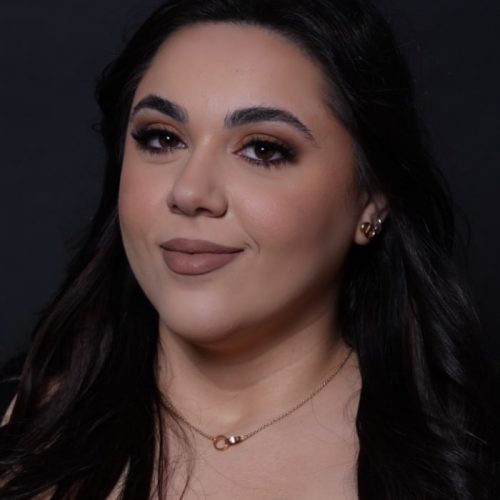
Marriage and Family Therapist Associate, MA
Medically reviewed by Dr. Neda Javaherian, MD, Board-Certified Psychiatrist, and Verta Keshishyan, AMFT (Associate Marriage and Family Therapist), registered with the California Board of Behavioral Sciences and supervised by Ari Labowitz, LMFT. Verta has three years of experience with the Department of Mental Health supporting low-income families and families in crisis.
We specialize in treatments for mental health issues and co-occurring disorders.
We concentrate on mental health treatments and co-occurring conditions.
We provide a personalized approach to care.
We possess many years of relevant experience and a strong track record of success.
Every group is led by a master’s-level therapist.
Our partial hospitalization and intensive outpatient programs provide choices for morning, afternoon, or evening sessions.
We offer case management grounded in clinical evidence.
Experience a secure setting that allows you to concentrate on healing and maintaining a healthy way of life.
We provide opportunities to engage with individuals at every phase of recovery.
We accept most commercial PPO plans with out-of-network benefits. Coverage and costs vary by plan, and we verify your benefits before treatment.
We accept most commercial PPO plans with out-of-network benefits. Coverage and costs vary by plan, and we verify your benefits before treatment.