Verify Insurance
Fast • Secure • Confidential
Speak with our team today
Out in Woodland Hills, dual diagnosis treatment from Quest Wellness Center reaches you mostly by secure video, the West Valley being far enough that its Joint Commission accredited North Hollywood program runs online first and in person by choice. The program treats a mental health condition and a co-occurring substance use disorder in one plan, across morning, afternoon, and evening tracks through PHP, IOP, and outpatient care.
Woodland Hills is far enough west that distance drops out of the decision entirely, since the whole program can be done by secure video. Quest delivers every level of care online across California, so a Woodland Hills client works with the same psychiatrist-led team on the same plan as anyone sitting in the North Hollywood room, no twelve-mile run up the 101 attached. In-person is available for those who want it, though it is a longer haul from the West Valley. For most people out here juggling work and family, video is what makes intensive treatment realistic, and it is the entire program rather than a thinned-down version of it.
For the West Valley specifically, the calculation is simple: Warner Center offices, Ventura Boulevard businesses, and the households in between are far enough from most integrated dual diagnosis programs that video is not a compromise, it is the difference between starting treatment and postponing it another season.
A dual diagnosis is poorly served by care that runs on two separate tracks, and that is worth saying plainly, because it is a common arrangement. One track treats the substance use, another handles the mental health condition, and the two coordinate loosely at the edges if at all, so gaps can open exactly where the conditions hand off to each other. Quest runs a single track instead: the same clinicians manage the psychiatric care and the addiction, and every therapy and medication call accounts for both together. When the two conditions are feeding each other, one integrated team is what keeps either from being treated as though it stood alone.
A dual diagnosis means a mental health condition and substance use are active at the same time, intertwined. On the mental health side there is usually a depressive or anxious illness, though trauma, bipolar disorder, or ADHD can occupy that place instead, with a drink or a drug opposite it. They form one diagnosis because they interlock, each condition worsening its partner. Handle only one and the untreated side pulls the progress back, which is the whole reason the two belong on one plan under one team.
Medication runs through a board-certified psychiatrist held inside the treating team, managed as an ongoing piece of the work rather than a one-off referral out. A prescriber who cannot see the substance use may pick a drug that quietly cuts against recovery; one who sees the whole picture does not. Medication can be aimed at whatever powers the use, a low mood, anxiety, bipolar swings, ADHD, or broken sleep, easing it until therapy takes hold. An approved medication for the substance use, if one exists, is part of that plan, and none of it stands in for the therapy running beside it.
Methods are chosen to fit the pairing and not run off a template. Cognitive Behavioral Therapy interrupts the back-and-forth between the symptom and the substance; Dialectical Behavior Therapy builds the capacity to carry a hard feeling without a substance; Motivational Interviewing begins from a person’s real readiness. Use that stems from trauma is addressed with EMDR and related trauma-focused therapy. Most of the week centers on topic-based group work, while individual sessions address more private concerns. ACT, SFBT, psychodynamic therapy, and coordinated TMS care through Breakthrough TMS may be added when appropriate. Every group at Quest is led by a master’s-level therapist, supervised by licensed clinicians.
Quest runs three outpatient levels, and where a client from Woodland Hills starts depends on how much the two conditions are disrupting daily life.
PHP | IOP | OP | |
Weekly load | Several hours, most weekdays | Fewer hours across the week | Lightest, spaced sessions |
Fits | Needing daily structure to stabilize | Holding a job through treatment | Maintaining gains |
Tracks | Daytime | Morning, afternoon, evening | Flexible |
Format | In-person or telehealth | In-person or telehealth | In-person or telehealth |
Partial Hospitalization is the most intensive, for people who need daily structure to steady both conditions. Intensive Outpatient steps down to fewer weekly hours across the three tracks, all available by video. Woodland Hills clients can also learn more about intensive outpatient care through Quest’s Canoga Park IOP program. Outpatient maintains progress once things settle. The same team carries you across all three, and most clients step down through them as they stabilize.
Whether weekly therapy is still enough is often clearer when you look at the past month. If progress disappears when substance use stops, sessions keep getting crowded out, or someone close has raised concerns, those patterns may point to the need for more structure. A multi-day program can provide that added support. The intake assessment determines the right level of care, confidentially and at no cost.
Quest Wellness Center accepts most commercial PPO plans with out-of-network benefits, and we verify your coverage before treatment begins. Use the Verify Insurance module on this page and we will confirm your benefits, usually within about fifteen minutes.
The facility is at 10736 Burbank Blvd, North Hollywood, CA 91601, about twelve miles east of Woodland Hills on the 101, though most West Valley clients attend by telehealth rather than making that drive daily; the Get Directions link below opens the route for anyone who wants the room. For the broader regional program, see dual diagnosis treatment in Los Angeles. Other Valley location pages include dual diagnosis treatment in Van Nuys and dual diagnosis treatment in Valley Glen. If medical stabilization is needed first, it comes before this level of care: Quest does not run inpatient detox, so the team coordinates it with Quest 2 Recovery, our own program, and brings you into integrated care afterward.
Quest Wellness Center serves Woodland Hills mainly by secure California telehealth, so you attend from home, with in-person care at 10736 Burbank Blvd, North Hollywood, CA 91601 about twelve miles east on the 101. Either way it is the same psychiatrist-led, integrated program.
It means the same clinicians manage both conditions for a Woodland Hills client, whether every session happens by video or some in person, so every therapy and medication decision accounts for both, rather than two programs coordinating loosely across the Valley.
Yes. PHP, IOP, and outpatient care are available by secure telehealth across California, so Woodland Hills clients can complete treatment from home. In-person care at the North Hollywood facility remains available whenever you prefer to attend onsite.
Care typically steps down gradually as your needs change, moving from PHP to IOP to outpatient treatment when clinically appropriate. After structured treatment, maintenance care and alumni support can help you stay connected and continue building on the progress you made.
Yes, including entirely by video, which is how most Woodland Hills clients attend. A board-certified psychiatrist inside the team leads medication for depression, anxiety, bipolar disorder, ADHD, and sleep problems, coordinated with the addiction treatment.
Woodland Hills clients can receive integrated treatment for depression, anxiety, PTSD and complex trauma, bipolar disorder, or ADHD alongside alcohol or drug use. Both conditions are managed within a single coordinated treatment plan.
The West Valley starts by video: call (818) 275-9810 or run your insurance through the form above, and the first assessment happens from home.
Verify Insurance
Fast • Secure • Confidential
Speak with our team today

MD, Board-Certified Psychiatrist
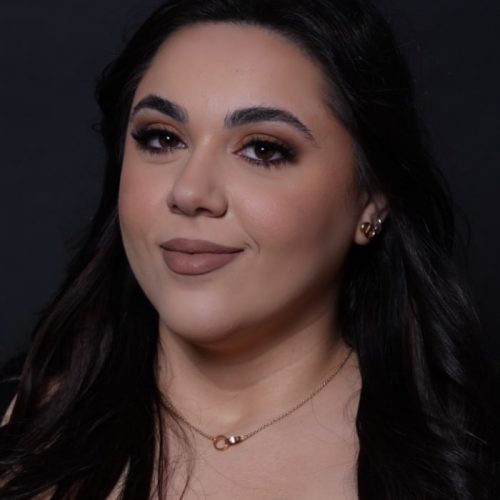
Marriage and Family Therapist Associate, MA
Medically reviewed by Dr. Neda Javaherian, MD, Board-Certified Psychiatrist, and Verta Keshishyan, AMFT (Associate Marriage and Family Therapist), registered with the California Board of Behavioral Sciences and supervised by Ari Labowitz, LMFT. Verta has three years of experience with the Department of Mental Health supporting low-income families and families in crisis.
We specialize in treatments for mental health issues and co-occurring disorders.
We concentrate on mental health treatments and co-occurring conditions.
We provide a personalized approach to care.
We possess many years of relevant experience and a strong track record of success.
Every group is led by a master’s-level therapist.
Our partial hospitalization and intensive outpatient programs provide choices for morning, afternoon, or evening sessions.
We offer case management grounded in clinical evidence.
Experience a secure setting that allows you to concentrate on healing and maintaining a healthy way of life.
We provide opportunities to engage with individuals at every phase of recovery.
We accept most commercial PPO plans with out-of-network benefits. Coverage and costs vary by plan, and we verify your benefits before treatment.
We accept most commercial PPO plans with out-of-network benefits. Coverage and costs vary by plan, and we verify your benefits before treatment.