



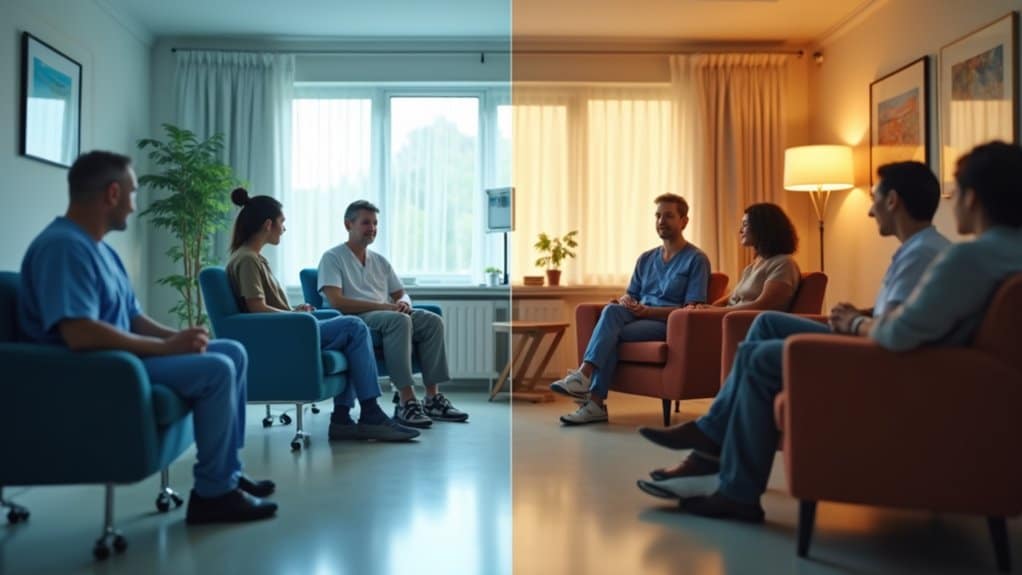


An Intensive Outpatient Program (IOP) offers structured mental health or substance use treatment, typically 9-10 hours weekly, while you continue living at home and managing your daily responsibilities. You’ll participate in evidence-based therapies including group sessions, individual counseling, and family support, usually scheduled 3-5 days per week. IOP works through a phase-based approach that gradually reduces hours as you build skills in relapse prevention, emotion regulation, and coping strategies. This treatment level can be as effective as inpatient care for the right person, and the sections below explain how to determine if it’s your best path forward.
Defining Intensive Outpatient Programs and Their Core Purpose

When you’re facing mental health or substance use challenges that feel too intense for weekly therapy but don’t require round-the-clock hospitalization, an Intensive Outpatient Program (IOP) offers a middle path designed around your life. You’ll engage in structured treatment, typically nine to ten hours weekly, while continuing to live at home and maintain work, school, or family commitments.
IOP provides the treatment intensity you need through evidence-based therapies: group sessions, individual counseling, and family support. You’ll develop practical coping skills, prevent relapse, and address co-occurring conditions under appropriate medical oversight. Research shows that IOPs can be as effective as inpatient treatment for certain populations, with studies finding comparable improvements in problem severity and abstinence rates across different care levels. The program adapts to your progress, not arbitrary timelines.
Whether you’re stepping down from inpatient care or stepping up from standard outpatient services, IOP meets you where you are, supporting your recovery while you remain connected to your community. Many programs also integrate complementary therapies alongside traditional counseling approaches to provide comprehensive, personalized treatment. Programs commonly run three to five days per week, with sessions lasting two to five hours each day.
How IOP Treatment Is Structured and Scheduled
Your IOP schedule is built around your real life, not the other way around. You’ll commit to 9, 19 hours weekly across 3, 5 days, with sessions lasting 2, 5 hours each. Programs offer morning, afternoon, and evening blocks so you can balance treatment with work, school, and family.
| Program Element | Frequency | Focus |
|---|---|---|
| Group Therapy | Multiple weekly | Relapse prevention, coping skills |
| Individual Sessions | 1, 2 per week | Personal goal setting |
| Psychoeducation | Scheduled days | Addiction biology, family dynamics |
Your treatment follows a phase-based approach, you’ll start with more intensive hours (sometimes up to 30 weekly), then gradually reduce as you meet clinical milestones. Most programs generally last 4 to 12 weeks, though duration varies based on your individual progress and specific treatment needs. Medication management is incorporated when appropriate to support your overall treatment plan. Structured daily schedules and regular attendance expectations keep you progressing while maintaining the flexibility you need to rebuild your life.
Who Benefits Most From Intensive Outpatient Care

You might find intensive outpatient care especially valuable if you’re managing moderate mental health challenges alongside substance use, as this level of treatment addresses both conditions without requiring you to pause your daily life. If you’re stepping down from inpatient or residential care, IOP offers structured support that helps you maintain your progress while reintegrating into your community, work, and relationships. This approach recognizes your ability to balance recovery with your existing responsibilities, whether that’s your job, your education, or caring for your family, while still receiving the therapeutic intensity you need. Research indicates that integrated intensive programs lasting approximately four months demonstrate high levels of client satisfaction through their combination of psychological, psychosocial, and complementary treatment methods.
Moderate Mental Health Conditions
Living with moderate depression, anxiety, or trauma symptoms often means you’re caught between two realities: you’re managing day-to-day responsibilities, but the weight of your mental health makes everything harder than it should be.
You don’t need hospitalization, yet weekly therapy isn’t enough. IOP meets you where you are, offering structured, evidence-based care while you maintain work, school, and family commitments. Through CBT, DBT, and group support sessions typically scheduled 3, 5 days weekly, you’ll build practical skills for symptom management. Virtual IOPs eliminate geographic barriers, bringing high-quality care directly to your home even if you live in rural or underserved areas.
Research shows IOPs achieve outcomes comparable to inpatient care, with over 90% of participants avoiding higher-level interventions. You’ll benefit from community resource access and flexible telehealth options. Many programs navigate insurance coverage considerations, making intensive treatment financially accessible while you stay grounded in your daily life.
Transitioning From Inpatient Care
When the crisis passes and you’re discharged from inpatient care, the real work of recovery begins, and that’s exactly where IOP steps in. This step-down approach gives you intensive therapeutic support without 24-hour supervision, bridging the gap between hospital stability and independent living.
You’re an ideal candidate for this shift if you’ve stabilized acute symptoms but still need structured treatment. IOP works best when you have:
- Specialized community supports ready to reinforce your progress outside treatment hours
- Family involvement during change to create accountability and emotional safety
- Lower withdrawal risk and persistent mental health or substance use needs requiring ongoing care
Research shows that seamless coordination between inpatient and IOP settings reduces readmission risk while helping you maintain gains, manage relapse triggers, and build the psychosocial foundation your recovery requires. Most IOPs typically meet 3 days weekly for approximately 3 hours per session, providing consistent structure while allowing you to maintain work, school, or family responsibilities.
Balancing Treatment and Responsibilities
If you’re worried that getting help means abandoning your job, your family, or your education, intensive outpatient care is designed specifically with you in mind. IOP programs offer day, evening, and weekend scheduling so you can attend sessions around your work or school commitments without creating employment gaps or academic disruption.
Living at home during treatment supports everyday routine integration, allowing you to practice recovery skills in real-time within your actual environment. You’ll continue maintaining family relationships and social connections rather than stepping away from them. This approach proves especially effective if you have stable housing, supportive relationships, and mild to moderate symptoms that don’t require 24-hour supervision. Many programs also provide coordination with employers or schools to actively support your participation in treatment. The flexible nature of IOP makes it a cost-effective treatment option since you don’t need to pay for residential facility accommodations while receiving care. Research shows that when properly matched to your needs, IOP delivers outcomes equivalent to inpatient care.
Therapeutic Approaches and Evidence-Based Modalities Used in IOP

You’ll find that IOPs draw on proven therapeutic methods designed to address both your substance use and underlying mental health needs. Cognitive Behavioral Therapy helps you identify and reshape thought patterns that fuel addictive behaviors, while group sessions connect you with peers who understand your journey and offer genuine support. When medication can strengthen your recovery, clinicians integrate it thoughtfully alongside therapy, creating an all-encompassing approach tailored to your unique circumstances. These evidence-based approaches have demonstrated outcomes comparable to inpatient treatment while allowing you to practice recovery skills in your actual day-to-day environment. The integrative model addresses your mind, body, and spirit to support sustainable healing beyond symptom management alone.
Cognitive Behavioral Therapy Applications
Cognitive Behavioral Therapy serves as a cornerstone of therapeutic intervention in Intensive Outpatient Programs, offering structured support for individuals traversing depression, anxiety, trauma, OCD, and personality disorders. You’ll engage in daily or multiple-times-per-week sessions designed to help you identify and reframe maladaptive thought patterns while building practical coping skills.
Your personalized treatment plan often integrates CBT with complementary approaches:
- Dialectical behavior therapy modules enhance emotion regulation and mindfulness capabilities
- Trauma informed approaches safeguard safety and empowerment throughout your healing journey
- Behavioral activation techniques strengthen your capacity to manage mood symptoms effectively
Within weeks, you’ll likely notice measurable symptom reduction as you develop distress tolerance skills, challenge unhelpful beliefs, and create relapse prevention strategies. This collaborative process honors your unique strengths while equipping you with sustainable tools for long-term wellness. IOPs demonstrate exceptional retention rates compared to traditional weekly therapy models, ensuring consistent engagement throughout your treatment journey. Treatment sessions may occur not only in traditional office settings but also in real-life situations, allowing you to practice and apply your newly acquired skills in the environments where you’ll actually use them. Creative expression activities complement traditional talk therapy by providing alternative channels for processing emotions and experiences.
Group and Peer Support
While individual therapeutic techniques form the foundation of your IOP experience, group therapy amplifies your healing through connection with others who truly understand your journey. These sessions typically last two hours, creating space for you to share your story, practice new skills through role-playing and mindfulness exercises, and receive genuine feedback from peers traversing similar challenges.
Your shared experiences with group members reduce isolation and normalize recovery’s ups and downs. You’ll find accountability partners who celebrate your progress and support you through setbacks. You’ll learn to establish specific and measurable goals that enhance your focus and motivation while tracking your treatment progress. Specialized groups address your specific needs, whether substance abuse, trauma, or dual diagnosis, while cultural identity groups honor your background, exploring how race, ethnicity, gender, or sexual orientation shapes your healing. This peer connection becomes a powerful catalyst for lasting change.
Medication Management Integration
When your healing requires both therapy and medication, your IOP’s integrated approach guarantees these treatments work in harmony rather than isolation. Your multidisciplinary team, psychiatrists, nurse practitioners, and therapists, collaborates to evaluate, prescribe, and monitor medications tailored to your unique needs. This coordination makes certain your pharmacotherapy supports your therapeutic work, whether you’re managing withdrawal, stabilizing symptoms, or addressing co-occurring conditions.
Your integrated care includes:
- Regular psychiatric consultations that adjust your medication based on your progress and side effects
- Pharmacy integration that simplifies access and verifies seamless prescription management throughout treatment
- Medication adherence support through education about your prescriptions, potential interactions, and strategies that fit your lifestyle
You’ll receive ongoing monitoring, symptom tracking, and 24/7 crisis support for urgent medication concerns, making sure your treatment plan evolves with your recovery journey.
The Role of Group Therapy and Peer Support in Recovery
Because recovery thrives in connection rather than isolation, group therapy stands as a cornerstone of Intensive Outpatient Programs. You’ll participate in evidence-based group dynamics led by trained therapists, typically meeting with 5, 15 peers for several hours weekly. These sessions address cravings, stress management, and relationship patterns through process groups, psychoeducational modules, and skills training.
The holistic peer involvement creates accountability for your recovery goals while reducing shame and isolation. You’ll gain interpersonal learning opportunities unavailable in individual therapy, sharing coping strategies, receiving structured feedback, and identifying maladaptive patterns together. Research shows IOP participants achieve comparable abstinence rates to inpatient treatment, with sustained engagement correlating to improved long-term outcomes. You’ll practice real-world skills like emotional regulation and communication, then refine them with immediate peer feedback, supporting your move to independent community living.
Measuring Success: Outcomes and Effectiveness of IOP Treatment
Evidence demonstrates IOP’s effectiveness across multiple dimensions:
- Reduced healthcare costs and emergency visits while maintaining strong recovery outcomes
- Improved employment rates and social functioning, helping you rebuild daily life
- Better management of co-occurring mental health conditions through integrated care
Long-term outcome durability strengthens when you engage consistently over extended periods. While individual results vary based on personal circumstances and program quality, IOP offers you evidence-based recovery support.
How IOP Differs From Inpatient, PHP, and Standard Outpatient Care
Understanding where IOP fits within the continuum of behavioral health care empowers you to make informed decisions about your recovery path. Inpatient programs offer 24/7 medical supervision in an immersive environment, ideal for severe or unstable cases requiring constant monitoring. PHP provides intensive day treatment with full structured schedules but allows evening returns home. Standard outpatient care offers minimal weekly sessions with maximum flexibility but less oversight.
IOP bridges these levels, delivering 9, 20 hours of weekly therapy while you maintain work, school, and family responsibilities. The setting differences matter: inpatient removes external triggers through residential care, while IOP exposes you to real-world challenges sooner, strengthening practical coping skills. You’ll receive structured group, individual, and family therapy plus relapse prevention education, more intensive than standard outpatient, yet flexible enough to support your daily life.
Integrating IOP Into Your Daily Life While Maintaining Responsibilities
- Morning, afternoon, or evening tracks adapt to your schedule, with virtual options available
- Daily home return preserves connections with partners, children, pets, and support networks
- Real-time skill application lets you test therapeutic strategies with coworkers, family, and in social situations
This balance empowers you to strengthen recovery while honoring your responsibilities and relationships.
Frequently Asked Questions
Does Insurance Cover Intensive Outpatient Program Treatment Costs?
Yes, insurance typically covers IOP treatment when it’s medically necessary, though you’ll want to verify your specific benefits first. Most private plans, Medicare, and Medicaid offer coverage, but you may face out of pocket costs like copays, deductibles, or coinsurance. Coverage limitations can include session caps or prior authorization requirements. Don’t let uncertainty stop you, contact your insurer directly to understand your benefits, and remember that many programs offer payment plans if you’re underinsured.
How Long Does a Typical IOP Treatment Program Last?
A typical IOP lasts 6, 12 weeks, though your average program duration depends on your unique needs. You’ll receive a customizable treatment plan that adjusts based on your progress, severity of addiction, and personal goals. Some people complete treatment in as little as two weeks, while others benefit from extended support beyond three months. Your treatment team will work with you to determine the right timeline, ensuring you’re building strong recovery skills at your own pace.
Can I Choose Which Days of the Week to Attend IOP?
Your ability to choose specific days depends on your facility’s available sessions and your individual treatment plan. Many IOPs offer flexible scheduling options like morning, afternoon, or evening groups to fit your work or school commitments. However, you’ll typically select from preset schedules (like Monday/Wednesday/Friday) rather than picking random days each week. During intake, you can discuss your preferences with your counselor, who’ll work to find a schedule that supports both your recovery and daily responsibilities.
What Happens if I Relapse or Miss Sessions During IOP?
If you relapse or miss sessions during IOP, your treatment team will work with you, not against you. They’ll reassess your needs and adjust your plan, potentially increasing support or reinforcing relapse prevention strategies. Session attendance policies exist, but they’re designed to help you stay engaged, not punish setbacks. Missing sessions prompts check-ins to address barriers, while relapse triggers safety planning and additional resources. You’ll receive compassionate support to get back on track toward recovery.
Are Virtual or Telehealth IOP Options Available for Remote Participation?
Yes, virtual IOP options are widely available, offering home-based treatment options that let you participate remotely via secure video platforms. You’ll access structured therapy, group sessions, and online counseling support from wherever you’re comfortable, eliminating travel barriers and fitting treatment around your daily responsibilities. These telehealth programs deliver evidence-based care with outcomes comparable to in-person IOPs, making recovery more accessible. Your provider will assess whether virtual participation suits your needs and clinical situation.