






Reports surrounding the USS Abraham Lincoln show why prolonged military deployments must be treated as a mental health and safety issue. Families have described exhaustion, poor morale, limited communication, difficult living conditions, and incidents involving sailors who reportedly tried to go overboard after more than eight months of deployment.
These claims are still developing, and Navy officials have disputed parts of the reporting. Even so, the situation highlights broader concerns around extended military deployment mental health, family separation, disrupted sleep, and limited opportunities for recovery.
Understanding the mental health effects of military deployment can help service members, veterans, and families recognize when additional support may be needed.
The USS Abraham Lincoln reports point to an urgent crew wellness concern

The reported situation deserves close review because it combines prolonged operational stress with possible threats to life. Navy Times reported that the deployment began in November 2025, was extended beyond its expected end, and included family accounts of sailors attempting or preparing to go overboard. The Navy had not provided a confirmed count of suicide attempts or overboard incidents.
Navy officials said command information did not show an increase in reported suicidal ideation or suicide attempts. That response matters, but crew morale, access to care, daily living conditions, and reported incidents still warrant attention.
A ship can remain operational while individual sailors experience serious fatigue, anxiety, depression, or hopelessness.
Extended military deployments can affect sleep, mood, and judgment
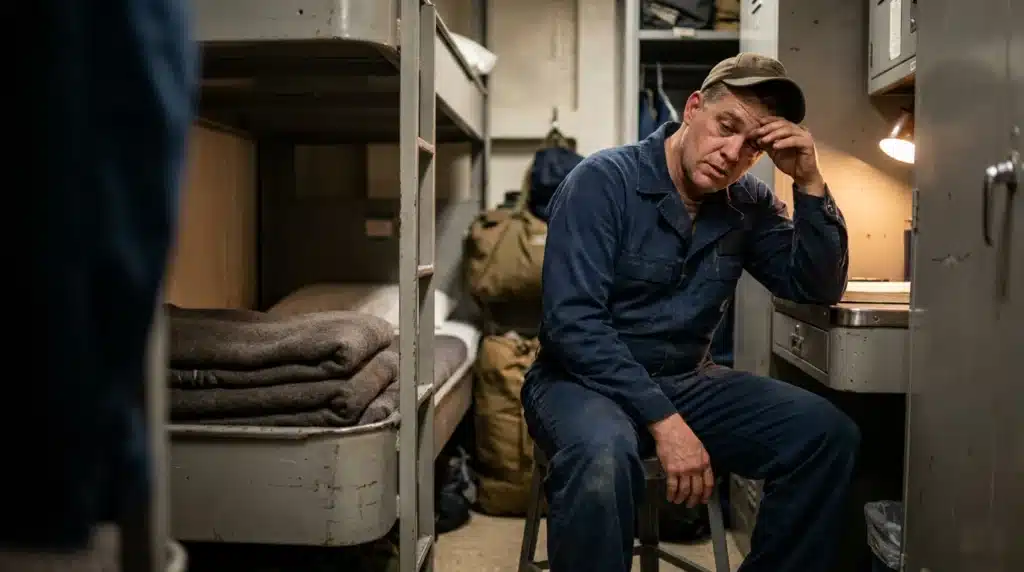
Long deployments can affect mental health by reducing recovery time and keeping the body and mind under sustained pressure. Sailors aboard aircraft carriers may face rotating watches, loud work areas, limited privacy, crowded sleeping spaces, and demanding duties.
A peer-reviewed study of 441 active-duty Navy sailors found that loud noise, difficulty resting when needed, limited access to quality health care, and insufficient staffing were among the most difficult underway stressors. Nearly half said at-sea stress programs were inadequate.
Chronic fatigue can affect attention, memory, emotional control, and decision-making. Military deployment stress may build gradually rather than appearing as one obvious crisis. Recognizing deployment-related mental health challenges early can help connect service members with support before symptoms become more severe.
Poor living conditions can deepen stress and hopelessness
Poor living conditions can add to mental strain by reducing opportunities for cleanliness, comfort, and recovery. Working toilets, clean showers, laundry access, enough food, safe water, and hygiene supplies are basic health needs aboard a crowded ship.
Task & Purpose reported family allegations of food shortages, moldy showers, broken toilets, laundry failures, and shortages of soap and toothpaste. Navy officials disputed several claims and said the ship had adequate food, clean water, and functioning air conditioning.
Daily living problems do not by themselves establish a mental health diagnosis. However, repeated problems can add pressure to people already working long hours in demanding conditions.
Repeated extensions and family separation can increase distress
Uncertain return dates can increase distress because they remove the sense of a clear endpoint. Service members and families often manage deployment by planning around an expected homecoming. When that date changes, childcare, finances, appointments, relationships, and other responsibilities may be affected.
Not everyone on a long deployment develops a mental health condition. Still, prolonged military deployment mental health concerns may continue after returning home. Some people adjust with time and support, while others may need professional care for anxiety, depression, trauma, PTSD, or related symptoms.
Suicidal thoughts require immediate support without shame
Suicidal thoughts require an immediate safety response, not humiliation, punishment, or assumptions about weakness. A person can be capable, experienced, and committed to service while facing a mental health emergency.
Warning signs may include talking about death, feeling trapped or hopeless, withdrawing, severe sleep changes, increased substance use, reckless behavior, rage, or sudden mood shifts. A stated plan, active intent, or access to a lethal method requires urgent action.
The National Institute of Mental Health states that asking someone directly whether they are thinking about suicide does not increase suicidal thoughts or behavior. A direct question can open an honest conversation and help others understand the level of danger.
Military OneSource advises calling emergency services or the Veterans and Military Crisis Line at 988 and pressing 1 when a service member is in immediate danger.
Outpatient treatment may support recovery after stabilization, but it cannot replace emergency or inpatient care during an acute crisis.
Military mental health support works best when it is accessible and trusted
Mental health resources work best when sailors can reach them quickly and trust the process. Concerns about privacy, career effects, peer judgment, or appointment availability may make some service members hesitant to seek help.
The Navy’s Deployed Resiliency Counseling program assigns licensed civilian counselors to aircraft carriers and large amphibious ships. These counselors provide nonmedical counseling, suicide-prevention support, education, and follow-up related to suicide-risk concerns.
Leaders should protect time for appointments, explain available resources clearly, and make sure sailors know how to reach medical staff, chaplains, and counselors. Shipmates can offer support, but professional care remains important when symptoms become severe.
Outpatient PTSD treatment can support recovery after military deployment

Outpatient treatment can help some service members and veterans manage trauma-related symptoms after deployment. Returning home may reduce immediate pressure, but anxiety, nightmares, depression, irritability, emotional numbness, substance misuse, or difficulties reconnecting with family can continue.
Military PTSD outpatient treatment may include individual therapy, group therapy, trauma-focused care, medication management when appropriate, and coping-skills development. Outpatient PTSD treatment for veterans can allow a person to receive structured clinical support while continuing to live at home.
The right level of PTSD treatment for veterans depends on symptoms, safety, daily functioning, medical stability, and individual needs. Some veterans may benefit from regular outpatient therapy, while others may need more structured care.
An IOP for veterans can provide structured outpatient care
An IOP for veterans can provide more support than weekly therapy without requiring 24-hour inpatient care. An intensive outpatient program for veterans generally includes several treatment sessions during the week while participants continue living at home.
A veteran IOP program may address depression, anxiety, PTSD, trauma, substance use, and co-occurring mental health conditions. Care may include individual therapy, group sessions, psychiatric support, coping skills, and relapse-prevention services.
A mental health IOP for veterans is not appropriate for every situation. A clinical assessment should determine whether intensive outpatient care, standard outpatient therapy, a higher level of care, or another treatment option is appropriate.
Protecting sailors is part of protecting military readiness
Protecting sailor mental health supports readiness because adequate rest, safe living conditions, and timely care affect a person’s ability to function safely. Food, clean facilities, working equipment, clear communication, and access to mental health support are operational needs.
The USS Abraham Lincoln reports should lead to careful review of living conditions, deployment planning, suicide-prevention procedures, clinical access, and family communication.
Respect for military service includes listening to sailors and families before stress reaches a crisis point. Support for mental health after military deployment also matters when trauma, depression, anxiety, substance use, or other symptoms continue after returning home.
Quest Wellness Center provides structured mental health support in North Hollywood
Quest Wellness Center provides in-person and virtual care for adults managing depression, anxiety, trauma, PTSD, suicidal thoughts, substance use, or co-occurring conditions. Medically stable adults who need more support than weekly therapy may qualify for the Intensive Outpatient Program. Quest also offers PTSD treatment and support for suicidal ideation.
To discuss treatment options, contact the Quest Wellness Center admissions team or call (818) 275-9810. Anyone experiencing active suicidal intent, immediate danger, or an inability to remain safe should call 911 or 988 before seeking outpatient admission.
Frequently asked questions about military deployment and mental health
Can a long military deployment affect mental health?
Yes, a long military deployment can affect mental health through ongoing stress, sleep disruption, combat exposure, family separation, and limited control over daily life. Possible symptoms include anxiety, depression, irritability, poor concentration, insomnia, withdrawal, or hopelessness. New or worsening symptoms deserve prompt attention.
What warning signs suggest a service member may be in crisis?
Warning signs can include talking about death, feeling trapped or hopeless, withdrawing, acting recklessly, increased substance use, severe sleep changes, or sudden mood shifts. A stated suicide plan, active intent, or access to a lethal method requires immediate emergency support.
Does asking about suicide increase the risk?
No. Asking directly and compassionately about suicide does not increase suicidal thinking or behavior. It can help someone explain what they are experiencing and help others determine whether immediate intervention is needed. Take the answer seriously and connect the person with professional support.
Can an intensive outpatient program help veterans after deployment?
Yes. An intensive outpatient program for veterans may help medically stable adults who need structured treatment but not round-the-clock supervision. IOP may include individual therapy, group therapy, trauma-informed care, medication management, coping skills, and treatment for co-occurring mental health or substance use conditions. A clinical assessment should determine the appropriate level of care.