
Verify Insurance
Fast • Secure • Confidential
Speak with our team today
IOP in the San Fernando Valley is available at Quest Wellness Center in North Hollywood, in the Valley rather than a drive away from it. For anyone searching iop San Fernando Valley, the facility sits in the eastern end of the region, not across the hill in Los Angeles. The program treats depression, anxiety, PTSD, trauma, and co-occurring substance use across morning, afternoon, and evening tracks, running 3 to 4 hours a day, 3 to 5 days a week, in person or virtually across California.
Most intensive outpatient options that show up for the San Fernando Valley are either across the hill in central Los Angeles or clustered at the western end around Woodland Hills and Tarzana. Quest Wellness Center is at 10736 Burbank Boulevard in North Hollywood, which puts it in the eastern Valley, close to the 101, 170, and 134 interchange that most of the region feeds into.
That location matters for a program you attend three to five times a week. North Hollywood, Burbank, Sherman Oaks, Studio City, Van Nuys, and Valley Village are all inside a 15-minute reach outside peak hours. For the western Valley, Encino and Tarzana are a straight run down Ventura or the 101. The virtual track covers everyone else across California, so distance never becomes the reason treatment does not happen.
The program draws from across the San Fernando Valley. In the central and eastern Valley that means North Hollywood, Burbank, Sherman Oaks, Studio City, Van Nuys, Valley Village, Toluca Lake, and Valley Glen. To the west it reaches Encino, Tarzana, Woodland Hills, and Reseda. To the north, Panorama City, North Hills, and Northridge. Several of these have a dedicated page with local detail, including Encino, Canoga Park, and North Hollywood, with more to follow. Just east over the 134, we also serve neighbors through our mental health IOP for Glendale.
If your community is not on that list, it does not mean the program is closed to you. Virtual IOP runs statewide, and the North Hollywood facility is open to anyone in the region who prefers in-person care. Call and the admissions team will tell you plainly what makes sense from where you live.
Distance is the quiet reason a lot of outpatient treatment stalls. A program runs three to five days a week for weeks at a stretch, and every mile between home and the door gets covered dozens of times. People start committed, make the drive a few times, then trim sessions when work runs late or traffic turns a 20-minute trip into an hour. The trimming is where progress leaks away.
A program inside the Valley removes most of that friction for most of the region. The eastern and central Valley reaches North Hollywood in well under 20 minutes off-peak, and the western Valley has a clean run in along Ventura or the 101. For the days when even a short drive is too much, or for anyone in the far corners of the region, the virtual track carries the identical program to wherever you are. The point is not that in-person is better than virtual or the reverse. It is that neither distance nor a hard day should be able to knock you out of treatment.
IOP fits adults who are medically stable but need considerably more than a weekly therapy hour. You get 9 to 20 clinical hours a week while staying home and keeping work, school, or family going.
Two paths lead in. Some step down from a partial hospitalization program or residential stay as symptoms settle and the intensity can safely ease. Others step up from weekly therapy that has helped but is no longer keeping pace. Anyone in acute crisis, active withdrawal, or needing 24-hour supervision needs a higher level of care first, and admissions will point you there rather than fit you somewhere you do not belong.
Quest treats mental health and any co-occurring substance use inside a single plan instead of running them one after the other. The core areas are depression, anxiety and panic, PTSD and complex trauma, personality and mood disorders, suicidal ideation, and dual diagnosis.
The reason for one plan is simple. Treat the depression and leave the drinking that grew up around it, and the drinking drags the depression back. Treat the substance use and leave the trauma underneath, and relapse risk stays high. Handling both at once is the only version that holds up over time.
Quest runs morning, afternoon, and evening tracks. They are clinically identical and differ only in timing, so the choice comes down to how your days are already shaped.
Morning suits people who want treatment behind them before work. Afternoon fits parents around school pickup and anyone easing down from a higher level. Evening runs for people working a full day who need treatment to sit outside working hours. Because the facility is central to the Valley, no track forces a long drive to reach it whichever one you choose.
Length of stay follows clinical progress, not a fixed count of weeks. Your therapist sets and revises the timeline with you as you move through.
The week is built from clinical groups, individual therapy, and case management across 3 to 5 days. Groups do most of the work, each with a defined subject rather than open time: psychoeducation, relapse prevention, co-occurring disorders, and process sessions in rotation.
Individual therapy is your private time with a licensed clinician, spent working through what group raises. Case management runs the practical side, coordinating outside care and turning what happens in session into something that works at home. Medication management is available on site when a plan calls for it.
The core methods are Cognitive Behavioral Therapy, Dialectical Behavior Therapy, Motivational Interviewing, and trauma-informed practice. CBT works on the thinking patterns beneath mood symptoms and gives you ways to break them. DBT trains distress tolerance and emotional regulation for feelings that arrive faster than you can manage. Motivational Interviewing meets your readiness to change where it actually sits. Over Cahuenga Pass, the same program runs as our mental health IOP for Hollywood.
Trauma-informed groups run throughout, using evidence-based methods that build understanding and resilience through a strengths-focused approach rather than putting you back through the event. The wider set adds EMDR, Acceptance and Commitment Therapy, Solution-Focused Brief Therapy, and psychodynamic therapy.
The signals tend to be about how life is running rather than a formal diagnosis. Sessions get cancelled because the week overran. Work output slips enough that others notice. Sleep or appetite changed weeks ago and never came back. Someone close said something directly rather than dropping hints. None settles the question alone, but together they point toward weekly therapy no longer matching the load.
The intake assessment is built to answer exactly that. It reviews symptom history, past treatment, current medications, and what you need a program to do, then gives a straight answer about whether IOP fits or whether a heavier or lighter level is the better call. Asking costs nothing and stays confidential. When considering options for treatment, IOP in LA is often a highly recommended choice. Many individuals find that this level of care provides the structure and support needed during recovery.
Quest Wellness Center accepts most commercial PPO plans with out-of-network benefits, and we verify your coverage before treatment begins. What you pay depends on your plan, deductible, and coinsurance.
The benefits check takes about fifteen minutes on the phone. Where you are in the plan year moves the number more than anything else, which is why two people on the same track can owe very different amounts. Virtual sessions are billed the same as in-person under most policies, though your own policy is what governs. Enter your carrier and member ID in the form here to begin.
PHP | IOP | |
Hours per day | 5 to 6 hours | 3 to 4 hours |
Days per week | 3 to 5 days | 3 to 5 days |
Best for | Near-daily structure short of an overnight stay | Keeping work or school running during treatment |
Setting | Valley facility or virtual | Valley facility or virtual |
Scheduling | Daytime | Morning, afternoon, or evening |
PHP is the heavier level, for symptoms needing near-daily contact without residential care. IOP is the step down, for people steady enough to run their own days on fewer clinical hours. The usual route runs PHP to IOP to outpatient, each move made on progress rather than a calendar.
North Hollywood, at 10736 Burbank Boulevard, in the eastern San Fernando Valley near the 101, 170, and 134.
It draws from across the region, including North Hollywood, Burbank, Sherman Oaks, Studio City, Van Nuys, Encino, and Tarzana, with dedicated pages for Encino, Canoga Park, and North Hollywood. Virtual IOP covers anywhere in California.
Yes. Virtual IOP runs the same clinical structure across the state, so you can complete the program from anywhere in the Valley.
Three to four hours a day, three to five days a week, which comes to 9 to 20 clinical hours.
Yes. The evening track exists for people working days, with the same clinical content as the other two tracks.
Quest Wellness Center accepts most commercial PPO plans with out-of-network benefits, and we verify your coverage before treatment begins. What you pay depends on your plan, deductible, and coinsurance.
No. IOP is not detox and Quest does not provide detox. If medical detox is needed first, the team helps arrange it with an appropriate provider beforehand.
PHP runs 5 to 6 hours a day for people needing near-daily structure. IOP runs 3 to 4 hours a day for people managing more on their own.
Call (818) 275-9810 or send the verification form. Admissions checks coverage and books the assessment that confirms the level of care.
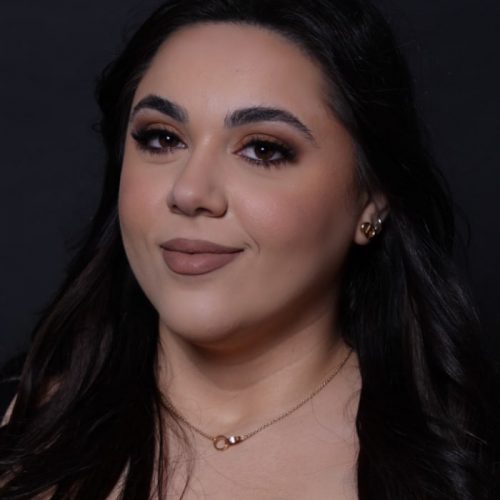
Marriage and Family Therapist Associate, MA
Medically reviewed by Verta Keshishyan, AMFT (Associate Marriage and Family Therapist), registered with the California Board of Behavioral Sciences and supervised by Ari Labowitz, LMFT. Verta has three years of experience with the Department of Mental Health supporting low-income families and families in crisis.
We specialize in treatments for mental health issues and co-occurring disorders.
We concentrate on mental health treatments and co-occurring conditions.
We provide a personalized approach to care.
We possess many years of relevant experience and a strong track record of success.
Every group is led by a master’s-level therapist.
Our partial hospitalization and intensive outpatient programs provide choices for morning, afternoon, or evening sessions.
We offer case management grounded in clinical evidence.
Experience a secure setting that allows you to concentrate on healing and maintaining a healthy way of life.
We provide opportunities to engage with individuals at every phase of recovery.
We accept most commercial PPO plans with out-of-network benefits. Coverage and costs vary by plan, and we verify your benefits before treatment.
We accept most commercial PPO plans with out-of-network benefits. Coverage and costs vary by plan, and we verify your benefits before treatment.