
Verify Insurance
Fast • Secure • Confidential
Speak with our team today
For Beverly Hills, Quest Wellness Center delivers IOP mainly as a statewide virtual program, with the North Hollywood facility open for anyone who would rather sit in the room. Anyone searching iop Beverly Hills reaches that facility, available remotely across the state or in the room over the hill. The program treats depression, anxiety, PTSD, trauma, and co-occurring substance use across morning, afternoon, and evening tracks, running 3 to 4 hours a day, 3 to 5 days a week.
The hills are the reason. Quest Wellness Center sits in North Hollywood, and Beverly Hills is on the far side of the Santa Monica Mountains, reached over Coldwater or Benedict Canyon or the long way around on the 405 and the 101. Off-peak the drive runs 25 to 40 minutes. At the hours IOP sessions meet it runs longer, since the canyon routes clog early and stay clogged.
Making that crossing three to five times a week, wrapped around a 3 to 4 hour session, is a heavy weekly load before any clinical work starts. Virtual IOP removes it. Delivered over secure platforms statewide, it keeps every piece of the in-person version intact: the groups, the individual sessions, the case management, just routed to wherever you happen to be. The North Hollywood facility stays available for anyone who wants to be in the room, and hybrid attendance lets you take some sessions each way. Neighbors over the hill have the same option through our virtual IOP for Century City, delivered the same way from home.
Beverly Hills has no shortage of therapists in private practice, and for many people a weekly session is the right level for a long time. IOP is what comes after that, when the weekly hour stops keeping up but an inpatient stay would be far more than the situation calls for.
It sits in the middle: 9 to 20 clinical hours a week through group work, individual therapy, and case management, with no overnight stay and far more contact than a single session. Someone whose depression has settled in deeper than talk therapy alone is reaching, or whose drinking has grown alongside the anxiety it was meant to quiet, tends to land exactly in that band. IOP is built for it.
Quest treats mental health and any co-occurring substance use inside one plan rather than in sequence. The main focuses are depression, anxiety and panic symptoms, PTSD and complex trauma, personality and mood disorders, suicidal ideation, and co-occurring substance use through dual diagnosis.
Handling both together is the point. Address the depression and leave the drinking that grew beside it, and the drinking keeps pulling the depression back down. Address the substance use and leave the trauma underneath it, and the relapse risk barely moves. The version that lasts works on both at the same time.
Quest runs morning, afternoon, and evening tracks, matched in clinical content and set apart only by the hour. Which one works comes down to the shape of your week.
Morning suits people who want treatment behind them before the day starts. Afternoon works for flexible schedules and for anyone easing down from a higher level of care. Evening runs for people working full days, and for Beverly Hills it is generally the one that fits, a session from home in the evening rather than a canyon crossing at rush hour. Since the virtual format takes travel out of it, all three are genuinely available rather than dictated by traffic.
How long you stay is set by clinical progress rather than a fixed run of weeks, and your therapist keeps adjusting that with you.
A virtual session holds the same shape as an in-person one: clinical groups, individual therapy, and case management across 3 to 5 days a week. Groups carry most of the clinical work, each organized around a set topic rather than open airtime, cycling through psychoeducation, relapse prevention, co-occurring disorders, and process work.
Individual therapy is your private time with a licensed clinician, spent on what the groups bring to the surface. Case management runs the practical track, coordinating outside care and turning session work into something that survives contact with an ordinary week. It all runs live on a secure platform, therapy and progress monitoring alike. Medication management is on hand when your plan needs it.
For plenty of people in Beverly Hills, keeping treatment private is not a preference but a requirement of the work they do or the life they lead. The platform is secure, and the practical edge of privacy is worth sorting out before you start.
The private space is on your side of it. Group only works when you can speak without measuring every word against who might overhear, so a room with a door that closes matters more than anything fancy. People manage it from a home study, a guest room, sometimes a car parked somewhere quiet. If privacy at home is genuinely hard to arrange, say so at the assessment, because it shapes the track and the format that will actually work for you.
The core methods are Cognitive Behavioral Therapy, Dialectical Behavior Therapy, Motivational Interviewing, and trauma-informed practice. CBT goes at the thought patterns beneath mood symptoms and gives you ways to break them. DBT builds distress tolerance and emotional regulation for feelings that outrun your ability to hold them. Motivational Interviewing meets your readiness to change at the point it truly sits.
Trauma-informed groups run start to finish, working from evidence-based methods that build understanding and resilience through a strengths-focused approach instead of marching you back through the event. The broader set brings in EMDR, Acceptance and Commitment Therapy, Solution-Focused Brief Therapy, and psychodynamic therapy.
The signs tend to turn up in how the week runs rather than on any form. Appointments get dropped because everything else spilled over. Work quality slides far enough that others clock it. Sleep or appetite changed a while ago and never came back. Someone close finally said it straight instead of circling around it. Alone, none of them is proof, but together they point to a single weekly session no longer covering the ground.
The intake assessment exists to settle that. It works through symptom history, past treatment, current medications, and what you actually need from a program, then delivers a plain answer on whether IOP is the level or whether something heavier or lighter suits you better. The call costs nothing and stays confidential. Nearby on the Westside, we run the same program as IOP for Brentwood.
IOP fits adults who are medically stable but need considerably more than a weekly therapy hour, giving you 9 to 20 clinical hours a week while you go on living at home and holding your work. It is not the level for everyone. If you are in acute crisis, going through active withdrawal, or need supervision around the clock, a higher level of care has to come first, and admissions will direct you to it rather than force a fit that is not there. The assessment is built to make that call straight, which now and then means being told a lighter or heavier level fits you better. Wherever you are in the county, the program is the same one offered as mental health intensive outpatient in Los Angeles.
Quest Wellness Center accepts most commercial PPO plans with out-of-network benefits, and we verify your coverage before treatment begins. What you pay depends on your plan, deductible, and coinsurance.
That check takes around fifteen minutes on the phone. How far into the plan year you are drives the number more than any other factor, so two people in the same track can land on very different bills. Most policies treat virtual sessions the same as in-person, though your policy is the one that rules. Add your carrier and member ID to the form here to begin.
PHP | IOP | |
Hours per day | 5 to 6 hours | 3 to 4 hours |
Days per week | 3 to 5 days | 3 to 5 days |
Best for | Near-daily structure without an overnight stay | Keeping work going during treatment |
Virtual option | Available | Available |
Scheduling | Daytime | Morning, afternoon, or evening |
PHP is the heavier level, for symptoms that need near-daily contact short of residential care. IOP is the lighter one, for people stable enough to run their own days on fewer clinical hours. The common path runs PHP to IOP to outpatient, every move keyed to progress.
No. Virtual IOP runs across California and covers Beverly Hills, so you can complete the whole program from home. If you would rather come in, the North Hollywood room is open to you.
Around 14 miles over the hill via Coldwater or Benedict Canyon, 25 to 40 minutes off-peak and longer at rush hour.
Three to four hours a day, three to five days a week, which comes to 9 to 20 clinical hours.
Yes. Evenings are set up for people who work daytime hours, running the identical clinical content the other two tracks do.
Most policies handle virtual and in-person the same way, though yours decides. Verification confirms it before you begin.
No. IOP is not detox and Quest does not provide detox. Where detox has to come first, the team helps you set it up with a suitable provider before you begin.
Yes. Case management works with your outside providers instead of displacing them, and that thread is written into the plan.
There is no fixed number of weeks. The timeline tracks your clinical progress, and your therapist adjusts it with you.
Call (818) 275-9810 or send the verification form. The admissions team checks your coverage and arranges the assessment that fixes the level of care.
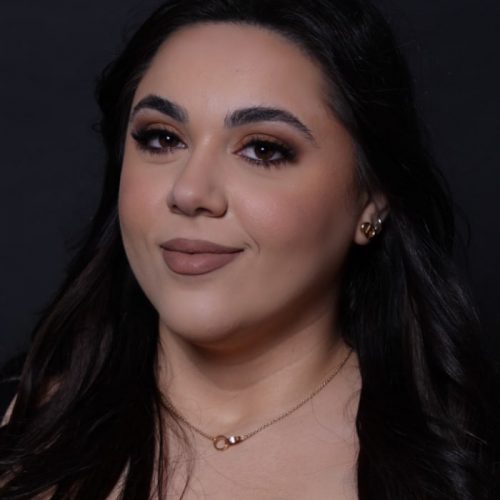
Marriage and Family Therapist Associate, MA
Medically reviewed by Verta Keshishyan, AMFT (Associate Marriage and Family Therapist), registered with the California Board of Behavioral Sciences and supervised by Ari Labowitz, LMFT. Verta has three years of experience with the Department of Mental Health supporting low-income families and families in crisis.
We specialize in treatments for mental health issues and co-occurring disorders.
We concentrate on mental health treatments and co-occurring conditions.
We provide a personalized approach to care.
We possess many years of relevant experience and a strong track record of success.
Every group is led by a master’s-level therapist.
Our partial hospitalization and intensive outpatient programs provide choices for morning, afternoon, or evening sessions.
We offer case management grounded in clinical evidence.
Experience a secure setting that allows you to concentrate on healing and maintaining a healthy way of life.
We provide opportunities to engage with individuals at every phase of recovery.
We accept most commercial PPO plans with out-of-network benefits. Coverage and costs vary by plan, and we verify your benefits before treatment.
We accept most commercial PPO plans with out-of-network benefits. Coverage and costs vary by plan, and we verify your benefits before treatment.